Osteoarthritis is not simply a disease of old age. Discover what happens inside your knee joints, why cartilage deteriorates, how inflammation and diet influence joint health, and what scientific research reveals about managing osteoarthritis.
Introduction: Why Do Your Knees Start Hurting After 40?
Have you ever experienced knee pain when standing up from a chair?
Perhaps your knees feel stiff after sitting for a long time. Climbing stairs becomes uncomfortable, and activities that once seemed effortless suddenly require more effort.
For many adults, these symptoms begin during their 40s or 50s.
Some assume that knee pain is simply part of getting older. Others suspect gout, excessive exercise, or certain foods.
However, one possible explanation is osteoarthritis (OA), a common chronic joint condition affecting millions of people worldwide.
Osteoarthritis is often described as a disease caused by worn-out cartilage. While cartilage deterioration is an important feature, modern scientific research reveals a much more complex process.
OA affects the entire joint, including cartilage, bones, synovial tissues, ligaments, and surrounding muscles.
Inflammation, oxidative stress, metabolic health, previous injuries, and body weight may all contribute to its development.
Understanding these mechanisms is important because osteoarthritis does not necessarily mean losing your mobility or becoming dependent on pain medication.
Although there is currently no established treatment that fully restores cartilage damaged by advanced OA, appropriate management can significantly improve symptoms and quality of life.
Let’s explore what happens inside an osteoarthritic knee and what scientific evidence recommends.
1. What Is Osteoarthritis?
Osteoarthritis is a chronic joint disorder characterized by structural and biological changes affecting the entire joint.
It commonly affects weight-bearing joints such as the knees and hips, although the hands and spine may also be involved.
Healthy joints contain specialized tissues that allow bones to move smoothly against one another.
One of the most important structures is articular cartilage.
Articular cartilage is a smooth, resilient tissue covering the ends of bones.
Its main functions include reducing friction, distributing mechanical loads, and helping the joint withstand repeated movement.
Unlike many other tissues, articular cartilage contains no blood vessels and has a limited capacity for self-repair.
The cells responsible for maintaining cartilage are called chondrocytes.
These cells produce and maintain an extracellular matrix containing collagen and proteoglycans.
Collagen provides structural strength, while proteoglycans help cartilage retain water and resist compression.
In osteoarthritis, the balance between tissue maintenance and degradation becomes disrupted.
Cartilage may gradually lose its structural integrity.
The underlying bone can undergo remodeling, and the synovial membrane may develop low-grade inflammation.
As these changes progress, patients may experience pain, stiffness, swelling, and reduced mobility.
However, osteoarthritis does not progress at the same rate in everyone.
Some people experience relatively stable symptoms for years, while others develop more significant functional limitations.
2. Osteoarthritis Is More Than Wear and Tear
For decades, osteoarthritis was commonly described as a wear-and-tear disease.
The traditional explanation suggested that repeated joint use gradually wears away cartilage, much like mechanical parts deteriorate over time.
Although mechanical stress is important, this explanation is incomplete.
Research now recognizes OA as a complex disease involving interactions between mechanical forces and biological processes.
These processes include inflammation, oxidative stress, cellular aging, and changes in bone metabolism.
A major review published in The Lancet by Hunter and Bierma-Zeinstra in 2019 emphasized the complex nature of osteoarthritis.
The disease involves multiple joint tissues rather than cartilage alone.
This helps explain why two people of similar age may experience very different joint health.
One person may remain physically active into their 70s, while another develops knee OA during their 40s.
Age increases the risk, but it is not the only determining factor.
Body weight, muscle strength, previous injuries, genetics, and joint alignment also influence the condition.
Importantly, normal physical activity should not automatically be considered harmful to cartilage.
Appropriate exercise is actually one of the most strongly recommended treatments for osteoarthritis.
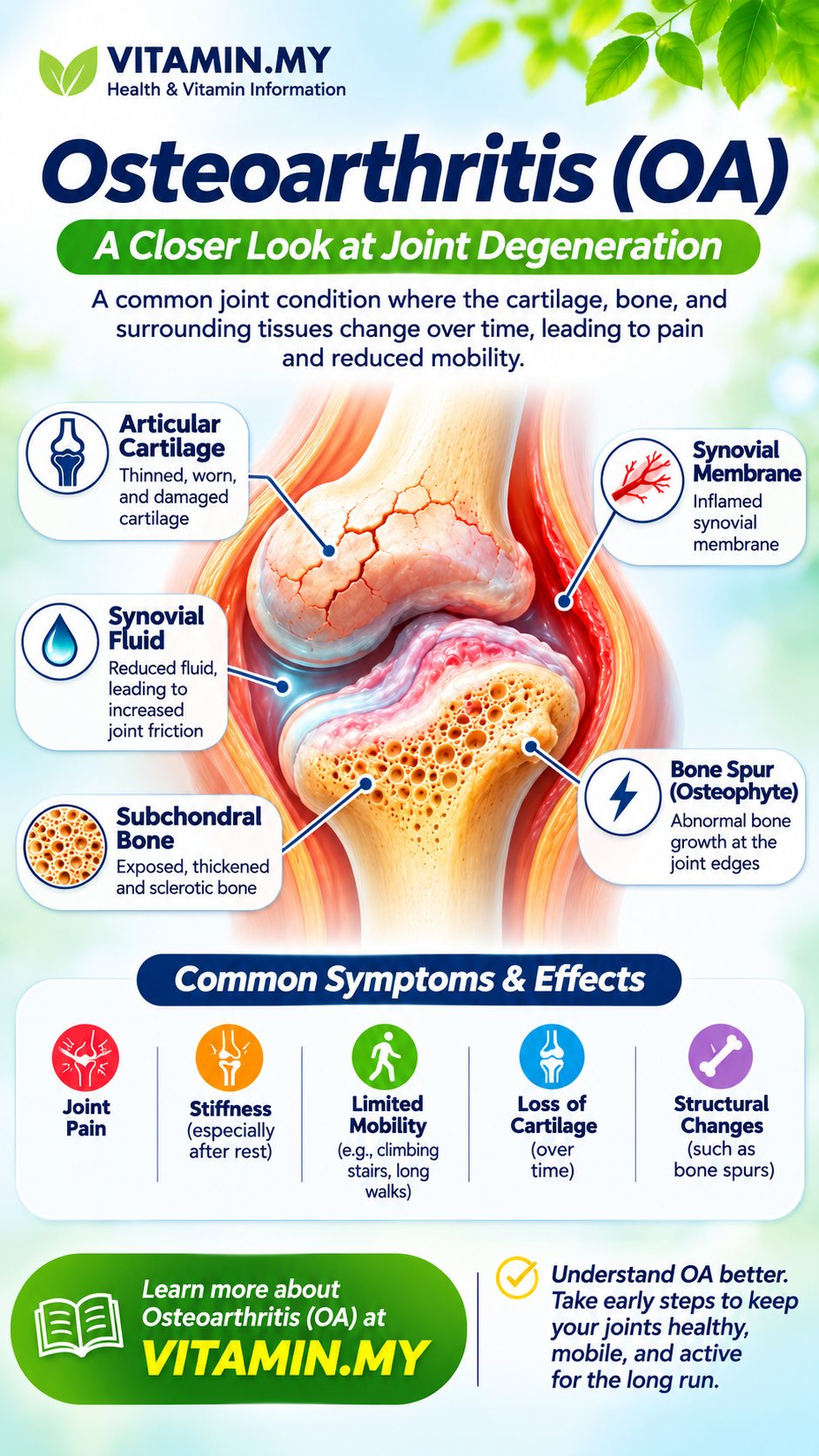
3. What Happens Inside an Osteoarthritic Knee?
Understanding the different structures affected by OA helps explain why symptoms develop.
Articular Cartilage: Thinning and Structural Damage
Articular cartilage covers the surfaces of bones within the joint.
In osteoarthritis, cartilage may become rougher, thinner, and less capable of distributing mechanical forces.
Changes in collagen organization and proteoglycan content can affect its mechanical properties.
Over time, areas of cartilage loss may develop.
However, cartilage itself contains no pain nerves.
Therefore, cartilage damage alone does not fully explain osteoarthritis pain.
Synovial Membrane: Inflammation Inside the Joint
The synovial membrane lines the inner surface of the joint capsule.
It helps maintain the environment required for healthy joint function.
In some people with OA, this membrane becomes inflamed, a condition known as synovitis.
Synovitis may contribute to pain, swelling, and changes in joint function.
Unlike the intense inflammation often associated with rheumatoid arthritis, OA-related inflammation is frequently lower in intensity.
Nevertheless, it can still contribute to symptoms.
Synovial Fluid: Changes in Joint Lubrication
Synovial fluid lubricates the joint and helps nourish cartilage.
It contains substances such as hyaluronic acid that contribute to its lubricating properties.
In osteoarthritis, the composition and mechanical properties of synovial fluid may change.
It is important to understand that OA does not simply mean the joint has run out of fluid.
Changes in fluid quality, synovial inflammation, and cartilage structure can all affect joint function.
Subchondral Bone: Changes Beneath Cartilage
Subchondral bone is the bone located immediately beneath articular cartilage.
In OA, this bone may undergo remodeling and become denser in certain areas.
This process is sometimes called subchondral sclerosis.
Other structural changes may include bone marrow lesions and cyst-like abnormalities.
These changes can influence the distribution of forces within the joint and may contribute to pain.
Bone Spurs: Osteophyte Formation
Osteophytes are bony growths that may develop around joint margins.
They are commonly visible on X-rays of osteoarthritic joints.
Osteophytes reflect changes in joint structure and remodeling.
However, their presence does not necessarily indicate severe pain.
Some individuals have noticeable osteophytes without major symptoms.
4. Why Does Osteoarthritis Cause Pain?
One of the most interesting aspects of OA is that the severity of cartilage damage does not always match the severity of pain.
Some patients have significant changes on X-rays but experience relatively mild discomfort.
Others report substantial pain despite less pronounced structural abnormalities.
This occurs because pain can originate from several structures, including subchondral bone, synovial tissues, ligaments, and the joint capsule.
Muscle weakness and altered movement patterns may also influence symptoms.
In addition, the nervous system plays a role in how pain signals are processed.
Some individuals develop increased pain sensitivity, meaning the nervous system responds more strongly to certain stimuli.
This helps explain why effective OA management often requires more than one intervention.
Exercise, weight management, education, medication, and other treatments may each address different contributors to pain.
5. Why Can Osteoarthritis Develop in Your 40s?
Although OA becomes more common with increasing age, younger adults can develop the condition.
Several factors may increase the risk.
Excess Body Weight
Excess weight increases the mechanical load on weight-bearing joints.
During walking, forces transmitted through the knee can reach several times body weight.
This means that even modest changes in body weight can influence the forces experienced by the joint.
However, obesity affects OA through more than mechanical loading.
Adipose tissue also produces biologically active substances that influence metabolism and inflammation.
Previous Joint Injuries
People who have experienced anterior cruciate ligament injuries, meniscus damage, or significant knee trauma have an increased risk of developing OA later in life.
Even after successful treatment, structural and biomechanical changes may persist.
Muscle Weakness
The quadriceps muscles at the front of the thigh are particularly important for knee function.
Weakness in these muscles can make climbing stairs, walking, and standing from a seated position more difficult.
Muscle weakness may also contribute to reduced physical activity.
Genetics
Family history can influence susceptibility to OA.
Genetic factors may affect cartilage biology, joint structure, and other aspects of disease risk.
Joint Alignment
Differences in joint alignment can alter how mechanical forces are distributed across the knee.
For example, varus or valgus alignment may increase loading in particular areas of the joint.
These factors can interact over time, influencing the development and progression of OA.
6. Inflammation and Osteoarthritis: What Does Science Reveal?
Inflammation has become an important area of osteoarthritis research.
Scientists have identified several inflammatory mediators that may participate in joint tissue changes.
These include interleukin-1 beta (IL-1β), tumor necrosis factor-alpha (TNF-α), and interleukin-6 (IL-6).
These signaling molecules are involved in numerous biological processes.
In experimental models, inflammatory pathways can influence enzymes responsible for breaking down components of cartilage.
Among these enzymes are matrix metalloproteinases, commonly abbreviated as MMPs.
Researchers also study the NF-κB signaling pathway, which regulates the expression of many genes involved in inflammation.
However, osteoarthritis is not simply an inflammatory disease.
Mechanical loading, cellular metabolism, tissue remodeling, and nervous system processes all contribute.
This distinction is important when evaluating supplements or medications advertised as anti-inflammatory.
A substance that reduces an inflammatory marker in laboratory experiments does not necessarily improve OA symptoms in human patients.
Clinical trials are needed to establish meaningful benefits.
7. Oxidative Stress: Another Piece of the Osteoarthritis Puzzle
Oxidative stress occurs when the production of reactive molecules exceeds the capacity of the body’s protective systems to regulate them.
Reactive oxygen species, or ROS, are produced naturally during cellular metabolism.
At normal levels, they participate in important signaling processes.
However, excessive ROS production may contribute to cellular damage.
Researchers have investigated oxidative stress in cartilage cells and other joint tissues.
Experimental studies suggest that oxidative stress can influence chondrocyte function, inflammatory signaling, and extracellular matrix metabolism.
These findings have generated interest in antioxidant compounds.
Examples include vitamin C, polyphenols, and resveratrol.
However, an important distinction must be made.
Antioxidant activity in laboratory studies does not automatically mean that taking antioxidant supplements will reduce osteoarthritis pain or regenerate cartilage.
The human body is far more complex than an isolated laboratory system.
Factors such as absorption, metabolism, dosage, and tissue distribution can affect whether a compound produces clinically meaningful results.
Currently, antioxidant supplements are not established as disease-modifying treatments for OA.
8. Osteoarthritis vs Gout: Are They the Same?
Many people mistakenly assume that knee pain is always caused by gout.
However, osteoarthritis and gout are different conditions.
Osteoarthritis involves structural and biological changes within the joint.
Symptoms often develop gradually.
Pain may become more noticeable during activity, while stiffness commonly occurs after periods of rest.
Gout, on the other hand, is caused by the formation of monosodium urate crystals within joints.
These crystals can trigger intense inflammatory attacks.
Gout often produces sudden, severe pain, swelling, warmth, and redness.
Although the big toe is a classic location, gout can also affect the knee.
Importantly, someone can have both gout and osteoarthritis.
Therefore, persistent or unexplained joint symptoms should be evaluated rather than automatically attributed to one condition.
A suddenly hot, swollen joint, especially when accompanied by fever, requires urgent medical assessment because joint infection is another possible cause.
9. Can Diet Influence Osteoarthritis?
Diet plays an important role in overall health, but its relationship with OA requires careful interpretation.
The strongest evidence supporting dietary intervention in knee OA concerns weight management.
For people with overweight or obesity, reducing body weight can improve symptoms and physical function.
Diet may also influence metabolic health, muscle maintenance, and nutrient intake.
However, there is no single food that has been proven to reverse OA.
Likewise, ordinary foods such as chicken, eggs, or seafood do not directly cause osteoarthritis.
A balanced dietary pattern is generally more important than avoiding individual foods without a medical reason.
The Mediterranean Diet
The Mediterranean dietary pattern emphasizes vegetables, fruits, legumes, whole grains, olive oil, nuts, and fish.
It generally limits highly processed foods and excessive saturated fat.
This dietary pattern has been investigated in relation to inflammation and several chronic diseases.
Some studies suggest potential benefits for OA symptoms.
However, the evidence remains less established than the evidence supporting weight reduction and exercise.
A Mediterranean-style diet may still be a sensible option because of its broader nutritional benefits.
Protein Intake
Protein is essential for maintaining and repairing body tissues.
For individuals with knee OA, adequate protein intake is particularly relevant because muscle strength influences joint function.
Protein-rich foods include fish, eggs, poultry, dairy products, tofu, tempeh, beans, and lentils.
Protein supplements may be useful when dietary intake is insufficient, but they are not required for everyone.
Fruits and Vegetables
Fruits and vegetables provide vitamins, minerals, fiber, and various phytochemicals.
These nutrients support normal physiological functions and overall health.
However, no specific fruit or vegetable has been proven to regenerate cartilage damaged by OA.
10. The IDEA Clinical Trial: Why Weight Loss Matters
One of the most influential studies examining lifestyle management in knee OA was the Intensive Diet and Exercise for Arthritis trial, commonly known as IDEA.
Published in JAMA in 2013, the trial involved adults aged 55 years and older who had symptomatic knee OA and overweight or obesity.
Participants were assigned to different interventions involving diet, exercise, or a combination of both.
The study lasted 18 months.
The diet-plus-exercise group achieved an average weight reduction of approximately 11.4%.
The diet-only group lost approximately 9.5%, while the exercise-only group lost approximately 2%.
The combined intervention also produced important improvements in several clinical outcomes, including pain and physical function.
Researchers evaluated additional measures related to knee loading and inflammatory markers.
The results demonstrated that combining dietary weight management with exercise can provide meaningful benefits.
This is particularly important because weight loss alone is not the only objective.
Preserving muscle strength and maintaining physical function are also essential.
For someone with knee OA and excess weight, a sustainable diet combined with appropriate exercise is often more useful than relying exclusively on supplements.
Reference: Messier SP et al. (2013), JAMA, 310(12), 1263–1273.
11. How Much Weight Should You Lose?
Clinical guidelines recommend weight management for people with knee or hip OA who have overweight or obesity.
The American College of Rheumatology/Arthritis Foundation guideline identifies weight loss as an important treatment strategy.
A reduction of approximately 5% of body weight can provide benefits.
Larger reductions may offer additional improvements.
The NICE guideline also highlights that losing 10% of body weight is likely to be more beneficial than losing 5%.
For example, an individual weighing 90 kilograms might initially aim to lose around 4.5 kilograms.
A further goal could be considered based on individual health and medical advice.
However, rapid or excessively restrictive dieting is not recommended.
Losing weight too aggressively may contribute to muscle loss.
For OA patients, maintaining muscle strength is particularly important.
The goal should be improved joint function and overall health, rather than simply achieving a lower number on the weighing scale.
12. Why Strong Thigh Muscles Matter
The quadriceps are a group of muscles located at the front of the thigh.
They help extend the knee and control movement during activities such as walking, climbing stairs, and standing up.
When quadriceps strength declines, everyday movements may become more difficult.
Pain can also discourage physical activity.
This creates a potentially harmful cycle.
Pain leads to reduced movement.
Reduced movement contributes to muscle weakness.
Muscle weakness then makes physical activities more challenging.
Appropriate strengthening exercises can help interrupt this cycle.
Examples include controlled sit-to-stand exercises, seated knee extensions, and other resistance exercises prescribed according to individual ability.
Protein intake supports normal muscle maintenance and adaptation to exercise.
However, protein alone cannot replace physical training.
The combination of adequate nutrition and progressive exercise is more meaningful than either approach in isolation.
13. Is Walking Bad for Osteoarthritis?
A common misconception is that people with OA should avoid walking because movement will wear away the remaining cartilage.
This is generally incorrect.
Appropriate physical activity is a central component of OA management.
Walking can help maintain cardiovascular fitness, muscle function, and independence.
However, the amount and intensity of activity should match the individual’s symptoms and capabilities.
Someone with severe knee pain may initially benefit from shorter walking sessions or lower-impact alternatives.
Cycling, swimming, and water-based exercises can also be useful.
Mild discomfort during exercise does not always indicate joint damage.
However, severe pain, substantial swelling, or symptoms that worsen significantly after activity should prompt reassessment of the exercise program.
A physiotherapist can help develop an appropriate plan.
14. What Exercises Are Recommended for Knee OA?
Exercise recommendations should be individualized, but several approaches have strong clinical support.
Strength Training
Strengthening the quadriceps, hamstrings, and hip muscles helps support functional movement.
Resistance can be increased gradually as strength improves.
Aerobic Exercise
Walking, stationary cycling, and swimming can improve cardiovascular fitness and physical endurance.
Flexibility and Mobility Exercises
Gentle range-of-motion exercises may help maintain joint movement.
These should be performed within comfortable limits.
Balance Training
Balance exercises can be particularly important for older adults.
Improving balance and coordination may help reduce the risk of falls.
Water-Based Exercise
Exercising in water reduces the amount of body weight supported by the joints during movement.
This may make exercise more comfortable for individuals with significant pain.
Consistency is generally more important than attempting very intense workouts occasionally.
15. Can Supplements Repair Cartilage?
Many supplements are marketed for joint health.
Common examples include glucosamine, chondroitin, collagen, omega-3 fatty acids, vitamin D, and various botanical extracts.
However, the quality and consistency of evidence vary considerably.
Some compounds have shown interesting effects in laboratory studies.
Others have been evaluated in human clinical trials.
Nevertheless, no widely available nutritional supplement has been conclusively shown to fully regenerate cartilage damaged by advanced OA.
Certain supplements may be appropriate for correcting nutritional deficiencies.
For example, vitamin D supplementation can be important for individuals with vitamin D deficiency.
Adequate calcium intake supports bone health.
Protein supports muscle maintenance.
Vitamin C is necessary for normal collagen synthesis.
However, these nutritional functions do not mean that additional supplementation will reverse osteoarthritis.
People should also consider potential interactions between supplements and medications.
Consulting a healthcare professional is especially important for older adults taking multiple prescriptions.
16. Resveratrol and Osteoarthritis: What Does Research Show?
Resveratrol is a naturally occurring polyphenol found in certain plants, including grapes and Japanese knotweed.
It has attracted scientific interest because of its effects on cellular signaling pathways in experimental research.
Researchers have investigated its relationship with oxidative stress, inflammatory signaling, and proteins such as SIRT1.
Some laboratory studies suggest that resveratrol can influence biological pathways relevant to OA.
However, clinical evidence remains mixed.
A randomized placebo-controlled study published in PLOS Medicine in 2024 evaluated oral resveratrol in adults with painful knee OA.
The trial included 142 participants.
After three months, resveratrol did not produce a statistically significant improvement in knee pain compared with placebo.
More recent smaller trials have reported improvements in selected measures of pain, function, and physical performance.
However, these findings require confirmation through larger, rigorous studies.
Importantly, research involving a particular resveratrol formulation does not establish the effectiveness of every supplement containing resveratrol or botanical polyphenols.
At present, resveratrol is not an established treatment for osteoarthritis.
17. Can Osteoarthritis Be Reversed?
Osteoarthritis is often described as irreversible because damaged cartilage has limited capacity for regeneration.
However, this statement should not be interpreted as meaning that patients cannot improve.
Pain and physical function can improve substantially even when structural changes remain.
Lifestyle interventions, physiotherapy, and appropriate medical treatments may help people return to activities they previously found difficult.
The objective is to reduce symptoms, improve mobility, preserve independence, and maintain quality of life.
Researchers continue to investigate treatments that may modify the underlying disease process.
However, no nutritional supplement has been established as a reliable method of rebuilding advanced cartilage damage.
Patients should be cautious of products promising complete cartilage regeneration or guaranteed recovery.
18. Medical Treatments for Osteoarthritis
When lifestyle management is insufficient, healthcare professionals may recommend additional treatments.
Topical Anti-Inflammatory Medication
Topical nonsteroidal anti-inflammatory drugs, or NSAIDs, are commonly recommended for knee OA.
These medications are applied directly to the affected area.
They can help relieve pain and may be preferable to oral NSAIDs for some patients.
Oral Medications
Oral NSAIDs may be appropriate for certain individuals.
However, they can carry gastrointestinal, kidney, and cardiovascular risks.
Treatment should be based on individual medical history.
Corticosteroid Injections
In selected cases, intra-articular corticosteroid injections may provide short-term symptom relief.
They are not a permanent solution or a method of regenerating cartilage.
Physiotherapy
Physiotherapy can help patients improve strength, mobility, and movement confidence.
Joint Replacement Surgery
For individuals with severe symptoms and substantial functional limitations despite appropriate nonsurgical management, joint replacement may be considered.
Not every patient with OA requires surgery.
Treatment decisions should reflect symptoms, physical function, patient preferences, and clinical assessment.
19. Five Common Mistakes People Make with Osteoarthritis
Mistake 1: Assuming Every Painful Knee Is Gout
OA, gout, inflammatory arthritis, and injuries can produce overlapping symptoms.
An accurate diagnosis is important.
Mistake 2: Avoiding All Physical Activity
Prolonged inactivity can weaken muscles and reduce mobility.
Appropriate exercise is usually beneficial.
Mistake 3: Depending Entirely on Supplements
Supplements cannot replace evidence-based exercise, weight management, or medical treatment.
Mistake 4: Losing Weight Without Preserving Muscle
Excessively restrictive diets can contribute to muscle loss.
Adequate nutrition and strengthening exercises should be part of weight management.
Mistake 5: Believing That Joint Damage Always Means Severe Disability
Many people with OA remain active and independent.
Symptoms and physical function can improve with appropriate management.
20. When Should You See a Doctor?
Persistent knee pain should be assessed if it interferes with daily activities or continues to worsen.
Medical evaluation is also important when the knee repeatedly locks, gives way, or becomes difficult to move.
Seek urgent medical attention if a joint suddenly becomes very swollen, hot, and red, especially when accompanied by fever.
These symptoms may indicate infection or another acute joint condition.
A diagnosis of OA is often based on symptoms and physical examination.
X-rays may be helpful in selected cases, but they are not always necessary.
Blood tests are not routinely required to diagnose typical OA, although they may be useful when another condition is suspected.
Early assessment can help patients receive appropriate advice and avoid unnecessary treatments.
21. A Practical Daily Joint Health Plan
A sustainable routine can make a meaningful difference.
Morning: Begin with gentle movement and a balanced breakfast containing a source of protein.
During the day: Avoid remaining in one position for excessively long periods. Incorporate short movement breaks when possible.
Meals: Choose vegetables, fruits, whole grains, and adequate protein. Adjust calorie intake if weight management is needed.
Exercise: Perform suitable strengthening and aerobic activities consistently.
Evening: Allow time for recovery and maintain healthy sleep habits.
For individuals with overweight or obesity, gradual weight reduction may help improve knee symptoms.
For those who are already lean or have low muscle mass, preserving strength and adequate nutrition may be more important than losing weight.
The most effective routine is one that can be maintained over time.
22. Frequently Asked Questions About Osteoarthritis
Is osteoarthritis only a disease of elderly people?
No. Although risk increases with age, OA can develop in younger adults, particularly after joint injuries or in the presence of other risk factors.
Does cracking or clicking in the knee mean osteoarthritis?
Not necessarily. Joint sounds can occur without significant disease.
However, clicking accompanied by persistent pain, swelling, or reduced function may require assessment.
Can drinking more water replace lost synovial fluid?
Normal hydration supports general health, but drinking extra water has not been shown to restore altered joint lubrication in OA.
Does eating seafood cause osteoarthritis?
No. Seafood is not an established direct cause of OA.
Some seafood may influence gout risk in susceptible individuals, but gout and OA are different conditions.
Can collagen supplements rebuild damaged cartilage?
Current clinical evidence does not establish that collagen supplements can regenerate cartilage damaged by advanced OA.
Is exercise safe when my knees hurt?
Appropriately selected exercise is generally recommended.
However, exercise intensity and type should be adapted to symptoms and medical circumstances.
Does everyone with OA eventually need knee replacement surgery?
No. Many individuals manage symptoms successfully without surgery.
Conclusion: Protecting Your Joints Starts with Understanding Osteoarthritis
Osteoarthritis is much more than simple cartilage wear.
It is a complex condition involving changes in cartilage, subchondral bone, synovial tissues, and surrounding muscles.
Inflammation, oxidative stress, previous injuries, genetics, obesity, and mechanical factors may all contribute to the disease.
Scientific research has greatly improved our understanding of these processes.
However, understanding a biological mechanism does not automatically mean that a supplement targeting that mechanism will improve patient outcomes.
The strongest evidence for managing knee OA continues to support appropriate exercise, weight management when needed, education, and individualized medical treatment.
A balanced diet helps support general health, while adequate protein intake is important for maintaining muscle strength.
Although there is currently no established supplement that can fully regenerate cartilage damaged by advanced OA, many people can achieve meaningful improvements in pain, mobility, and daily function.
The goal is not simply to protect cartilage. It is to maintain strong muscles, healthy body weight, comfortable movement, and long-term independence.
Your knees work hard every day.
Understanding how they function is the first step toward taking better care of them.
Scientific References
1. Hunter DJ, Bierma-Zeinstra S. (2019). Osteoarthritis. The Lancet, 393(10182), 1745–1759.
2. Loeser RF et al. (2012). Osteoarthritis: A Disease of the Joint as an Organ. Arthritis & Rheumatism, 64(6), 1697–1707.
https://doi.org/10.1002/art.34453
3. Messier SP et al. (2013). Effects of Intensive Diet and Exercise on Knee Joint Loads, Inflammation, and Clinical Outcomes Among Overweight and Obese Adults With Knee Osteoarthritis. JAMA, 310(12), 1263–1273.
https://doi.org/10.1001/jama.2013.277669
4. Kolasinski SL et al. (2020). 2019 American College of Rheumatology/Arthritis Foundation Guideline for the Management of Osteoarthritis of the Hand, Hip, and Knee. Arthritis Care & Research, 72(2), 149–162.
https://doi.org/10.1002/acr.24131
5. National Institute for Health and Care Excellence (2022). Osteoarthritis in Over 16s: Diagnosis and Management. NICE Guideline NG226.
6. Nguyen C et al. (2024). Oral Resveratrol in Adults with Knee Osteoarthritis: A Randomized Placebo-Controlled Trial. PLOS Medicine.
https://doi.org/10.1371/journal.pmed.1004440
Medical Disclaimer: This article is intended for educational purposes only and does not replace professional medical advice, diagnosis, or treatment. Consult a qualified healthcare professional for persistent joint symptoms or before starting new treatments or supplements.
