Almost everyone has experienced it at some point — a throbbing sensation at the temples, a heavy pressure across the forehead, or that unmistakable feeling of tightness wrapping around the skull like a vice. Headaches are among the most commonly reported health complaints worldwide, cutting across age groups, professions, and lifestyles without discrimination.
According to research published in the Journal of Headache and Pain, more than half of the global adult population experiences at least one headache episode every year. In terms of economic impact, headaches rank among the leading causes of workplace absenteeism, reduced productivity, and diminished quality of life — numbers that paint a picture far more serious than most people give this condition credit for.
For many of us, the instinctive response to a headache is straightforward: reach for a painkiller, swallow it with a glass of water, and wait for the relief to kick in. While pharmaceutical pain relief certainly has its place, there is a growing body of evidence — and centuries of traditional wisdom — supporting a different approach. Natural remedies, when applied correctly and at the right time, can be remarkably effective at reducing headache intensity, shortening its duration, and in some cases, preventing it from worsening altogether.
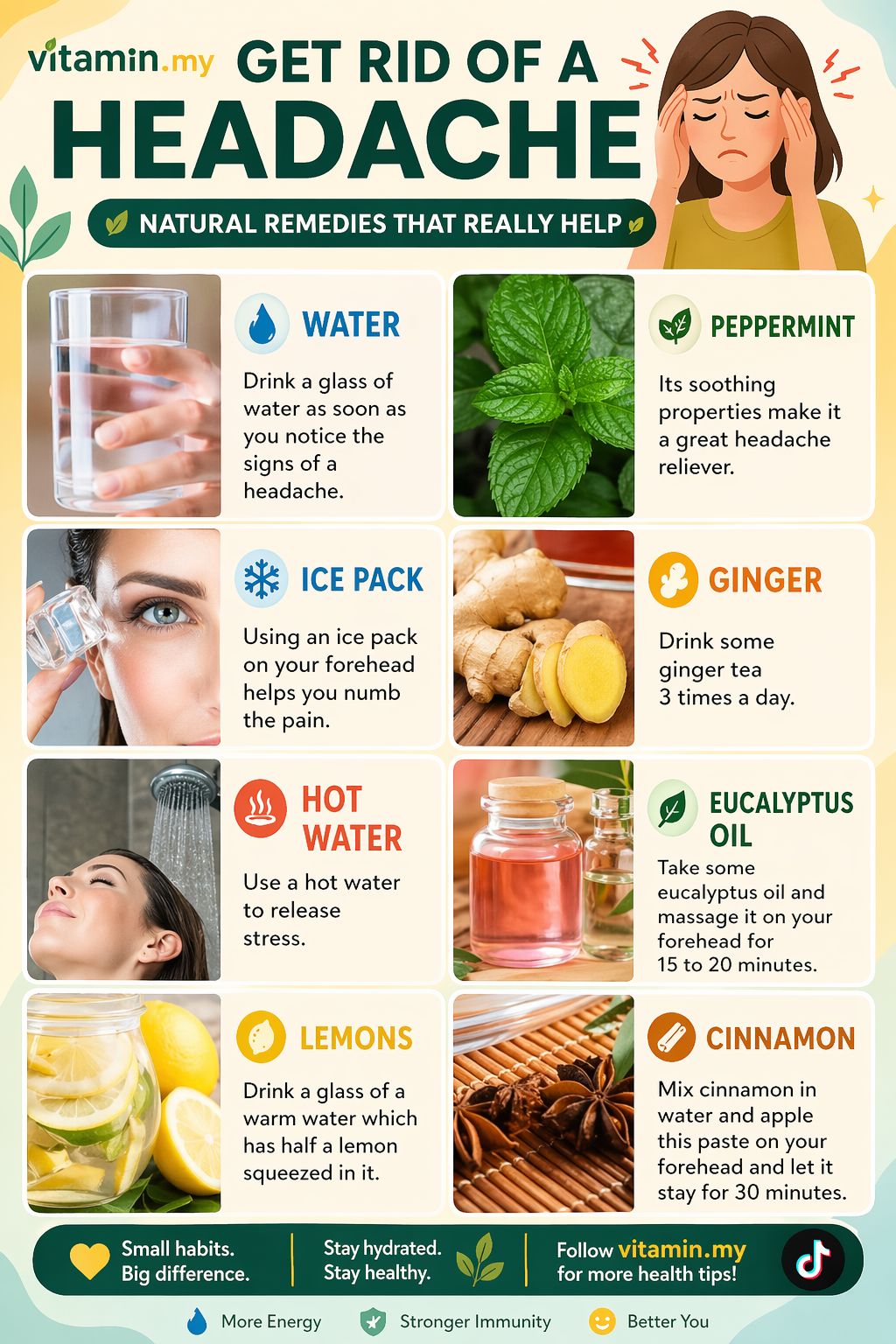
This article explores eight natural remedies backed by science and traditional use that you can try at home before resorting to medication. Understanding how and why each remedy works will help you make smarter, more informed choices about managing your headache — and your overall health.
Understanding the Headache: More Than Just “Head Pain”
Before diving into remedies, it helps to understand what a headache actually is and why it happens. Contrary to popular belief, the brain itself cannot feel pain — it has no pain receptors. The discomfort we experience during a headache comes from the activation of pain-sensitive structures around the brain, including the meninges (the membranes surrounding the brain), blood vessels, and the muscles and nerves of the scalp, face, and neck.
Headaches are broadly classified into two categories: primary headaches, which occur independently and are not caused by an underlying disease, and secondary headaches, which are symptoms of another condition such as an infection, injury, or hypertension.
The three most common types of primary headaches are:
Tension-type headaches — The most prevalent type, often described as a dull, pressing, or tightening sensation around the head. They are frequently triggered by stress, poor posture, eye strain, or muscle tension in the neck and shoulders.
Migraine headaches — Characterized by moderate to severe throbbing pain, often on one side of the head, and frequently accompanied by nausea, vomiting, and heightened sensitivity to light and sound. Migraines can last anywhere from a few hours to several days.
Cluster headaches — Less common but extremely intense, cluster headaches cause severe pain around one eye or one side of the head and tend to occur in cyclical patterns or “clusters.”
Most of the natural remedies discussed in this article are particularly effective for tension-type headaches and mild to moderate migraines. For severe or persistent headaches, it is always advisable to seek medical evaluation.
1. Water — The Simplest Remedy You Keep Forgetting
It sounds almost too simple to be true, but one of the most common — and most overlooked — causes of headaches is plain, ordinary dehydration. The brain is made up of approximately 73% water, and even mild dehydration can cause it to temporarily shrink, pulling away slightly from the skull and triggering pain receptors in the surrounding tissues.
A study published in the European Journal of Nutrition found that individuals who increased their daily water intake by just 1.5 litres experienced significantly fewer headaches, shorter headache duration, and less severe pain compared to those who maintained their usual hydration habits.
What to do: At the very first sign of a headache — whether it is a slight tightening at the temples, a mild pressure behind the eyes, or a subtle dull ache — drink a full glass of water immediately. Do not wait until the headache is in full force. In many cases, drinking one to two glasses of water within 30 minutes of early symptoms is enough to stop a dehydration-related headache in its tracks.
In Malaysia’s tropical climate, where heat and humidity cause the body to lose fluids rapidly through perspiration, staying consistently hydrated throughout the day is one of the most powerful preventive measures you can adopt. Aim for a minimum of eight glasses daily, and increase intake on hot days or after physical activity.
2. Peppermint — Nature’s Cool Relief
Peppermint has been used medicinally for thousands of years, and modern science has now confirmed what traditional healers long understood: this herb contains powerful compounds that can relieve headache pain effectively.
The key active ingredient in peppermint is menthol, a natural compound that produces a cooling sensation when applied to the skin. When peppermint oil is applied topically to the forehead and temples, menthol activates cold-sensitive receptors in the skin, creating a sensation that competes with and effectively overrides the perception of pain — a mechanism similar to how counter-irritant therapies work in modern medicine.
A landmark clinical study conducted by researchers at the University of Kiel, Germany, found that a 10% peppermint oil solution applied to the forehead was as effective as 1,000mg of paracetamol in reducing tension headache pain. This is a significant finding that has elevated peppermint from folk remedy to a scientifically validated therapeutic option.
Peppermint also works as a natural muscle relaxant and vasodilator, helping to ease the muscle tension and improve blood flow that often contribute to tension headaches.
What to do: Apply diluted peppermint essential oil (mixed with a carrier oil such as coconut or almond oil) to your temples and forehead in gentle circular motions. You can also brew peppermint tea and inhale the steam before drinking — the combination of internal and aromatic benefits provides a doubly soothing effect. Alternatively, a cold peppermint tea compress placed on the forehead can deliver relief within minutes.
3. Ice Pack — Cold Therapy for Fast Relief
Cold therapy, or cryotherapy, has been used in pain management for decades, and its application to headache relief is both simple and scientifically sound. When applied to the forehead, temples, or the back of the neck, an ice pack works through several mechanisms: it constricts blood vessels (reducing vascular dilation that contributes to throbbing pain), numbs the area by slowing nerve conduction, and reduces local inflammation.
Cold therapy is particularly well-suited for migraine headaches, where blood vessel dilation and inflammation of surrounding tissues play a central role in the pain experience. A study published in the Hawaii Medical Journal found that applying a frozen neck wrap at the onset of a migraine significantly reduced headache intensity compared to a placebo treatment.
The numbing effect of cold also disrupts the pain signal before it has a chance to fully register in the brain, providing immediate — if temporary — relief while the body’s own healing processes take over.
What to do: Wrap a few ice cubes in a thin cloth or use a commercially available ice pack. Apply it to your forehead, temples, or the base of your skull for 15 to 20 minutes at a time. Never apply ice directly to the skin, as this can cause frostbite. For migraines, some people find greater relief by applying the cold pack to the back of the neck rather than the forehead, targeting the major blood vessels that supply the brain.
4. Ginger — The Anti-Inflammatory Root
Ginger (Zingiber officinale) is one of the most thoroughly researched medicinal plants in the world, and its benefits for headache relief are increasingly well-documented. The primary bioactive compounds in ginger — gingerols and shogaols — possess potent anti-inflammatory and analgesic properties that act on the same pathways targeted by many pharmaceutical pain relievers.
Research published in Phytotherapy Research demonstrated that ginger supplementation was as effective as sumatriptan (a common migraine medication) in reducing migraine severity, but with significantly fewer side effects. Ginger works by inhibiting prostaglandin synthesis — the same mechanism by which non-steroidal anti-inflammatory drugs (NSAIDs) operate — thereby reducing the neurogenic inflammation that drives migraine pain.
Additionally, ginger helps address nausea, which frequently accompanies migraines and makes recovery even more uncomfortable. Its anti-nausea properties are well-established and have been validated in multiple clinical settings.
What to do: Brew fresh ginger tea by slicing a thumb-sized piece of fresh ginger root, simmering it in two cups of water for 10 minutes, and straining it into a mug. Add honey and a squeeze of lemon for taste. Drink this tea up to three times a day during a headache episode. For prevention, incorporating ginger regularly into meals — in stir-fries, soups, and curries — may help reduce the frequency of tension headaches over time.
5. Hot Water Shower — Stress Relief Through Hydrotherapy
The relationship between stress and headaches is one of the most well-established connections in medical science. When we experience psychological or physical stress, the body activates its “fight-or-flight” response, releasing hormones like cortisol and adrenaline that cause muscles to tighten — particularly in the neck, shoulders, and scalp — and blood vessels to constrict. This muscular tension and vascular changes are the primary drivers of tension-type headaches.
Hydrotherapy — the therapeutic use of water — has been used across cultures for millennia to promote relaxation, improve circulation, and relieve pain. A warm or hot shower works on multiple levels: the heat relaxes tense muscles in the neck and upper back, the steam opens nasal passages (helpful if your headache is sinus-related), and the sensation of warm water on the skin activates the parasympathetic nervous system — the body’s “rest and digest” mode — which counteracts the stress response and lowers cortisol levels.
Research from the Journal of Alternative and Complementary Medicine supports the use of warm water immersion as an effective non-pharmacological intervention for headache relief, particularly for those triggered by stress and muscle tension.
What to do: Take a warm shower, allowing the water to run over your neck, shoulders, and upper back for at least 10 to 15 minutes. Focus on deep, slow breathing while in the shower to amplify the relaxation response. If a shower is not available, a warm towel applied to the back of the neck or a warm foot bath can produce similar relaxation benefits through peripheral vasodilation.
6. Eucalyptus Oil — Breathe Easy, Think Clear
Eucalyptus oil has a long history of use in traditional medicine across Australia, Southeast Asia, and Europe, and its application in headache relief — particularly sinus headaches — is backed by a solid body of research. The primary active compound, 1,8-cineole (also known as eucalyptol), is a powerful anti-inflammatory, analgesic, and mucolytic agent.
When applied topically, eucalyptus oil penetrates the skin and acts on pain receptors, reducing the transmission of pain signals. When inhaled, its vapors help open congested nasal passages, reduce sinus pressure, and ease the breathing difficulties that often accompany or trigger sinus headaches. A study published in Evidence-Based Complementary and Alternative Medicine found that inhalation of eucalyptus oil significantly reduced headache pain intensity and improved emotional responses to pain, including feelings of anxiety and mental fatigue.
Eucalyptus oil also has a mild cooling effect similar to menthol, providing immediate sensory relief upon topical application.
What to do: Dilute a few drops of eucalyptus essential oil with a carrier oil (such as coconut or jojoba oil) and massage it gently onto your forehead, temples, and the bridge of your nose in slow circular motions. Continue the massage for 15 to 20 minutes for maximum benefit. Alternatively, add several drops to a bowl of hot water and inhale the steam with a towel draped over your head for five to ten minutes. Never apply undiluted essential oils directly to the skin, and keep oils away from the eyes.
7. Lemon Water — Alkalizing the Body from Within
Lemons may seem like an unlikely headache remedy, but their therapeutic value is supported by both traditional wisdom and emerging nutritional science. Many headaches — particularly those that occur in the morning or after dietary indulgences — are associated with an acidic internal environment, digestive disturbances, or mild dehydration.
Lemon juice, despite its acidic taste, has an alkalizing effect on the body once metabolized. This means it helps restore a more balanced internal pH, which can relieve headaches caused by dietary acid overload or digestive imbalance. Lemon water is also an excellent source of electrolytes, particularly potassium, which plays a crucial role in maintaining proper nerve function and fluid balance — both essential for preventing headaches.
Furthermore, the aroma of lemon itself has been shown in aromatherapy research to have mood-lifting and stress-reducing properties, which can help ease the anxiety that often accompanies or triggers headaches.
What to do: Squeeze half a fresh lemon into a glass of warm water — not cold, as warm water is more readily absorbed by the body and gentler on the digestive system. Drink this slowly, especially first thing in the morning or when a headache first begins. For added benefit, add a small pinch of Himalayan salt to replenish electrolytes. Drinking warm lemon water consistently every morning is also an excellent preventive habit for those who experience frequent headaches.
8. Cinnamon — The Spice with Surprising Healing Power
Cinnamon (Cinnamomum verum) is a spice celebrated worldwide for its warm flavour and remarkable medicinal properties. Its use in traditional medicine to address headaches dates back thousands of years in Ayurvedic and Chinese healing traditions, and contemporary research is beginning to validate these ancient practices.
The active compounds in cinnamon — including cinnamaldehyde, eugenol, and various antioxidant polyphenols — possess significant anti-inflammatory properties. Inflammation of blood vessels and surrounding tissues is a key driver of many headache types, and cinnamon’s ability to modulate inflammatory pathways makes it a genuinely useful tool in headache management.
When used as a topical paste on the forehead, cinnamon creates a mild warming sensation that increases local blood flow, relaxes surface muscle tension, and provides a counter-irritant effect that can distract the brain from deeper pain signals.
What to do: Mix a small amount of cinnamon powder with just enough water to create a smooth, thick paste. Apply this paste evenly across your forehead and allow it to remain for 30 minutes before gently rinsing off with lukewarm water. Ensure the paste does not come into contact with your eyes. For internal use, cinnamon tea — prepared by simmering a cinnamon stick in hot water for 10 minutes — can be consumed two to three times daily during headache episodes.
Putting It All Together: A Practical Headache Response Plan
The beauty of natural remedies lies in their accessibility and their potential to be combined for greater effect. Here is a practical response sequence you can follow the next time a headache strikes:
Step 1 — Hydrate first. Drink a full glass of water immediately. Many headaches resolve on their own within 30 minutes simply by rehydrating.
Step 2 — Apply topical relief. While waiting for hydration to take effect, apply diluted peppermint or eucalyptus oil to your temples and forehead, or place an ice pack on the area of greatest pain.
Step 3 — Address the root cause. If stress is the trigger, step into a warm shower. If digestion or acidity may be the cause, prepare warm lemon water. If inflammation is suspected, brew ginger or cinnamon tea.
Step 4 — Rest and reduce stimulation. Dim the lights, reduce screen time, and lie down in a quiet room if possible. Many headaches are aggravated by sensory overload.
Step 5 — Be consistent with prevention. Stay hydrated throughout the day, manage stress proactively, maintain good posture, get adequate sleep, and incorporate anti-inflammatory foods like ginger and cinnamon into your regular diet.
When to See a Doctor
While natural remedies are effective for most common headaches, certain warning signs should never be ignored. Seek immediate medical attention if your headache:
- Comes on suddenly and is described as the “worst headache of your life”
- Is accompanied by fever, stiff neck, confusion, or vision changes
- Follows a head injury or trauma
- Is progressively worsening over days or weeks
- Is accompanied by weakness, numbness, or difficulty speaking
These symptoms may indicate a more serious underlying condition requiring urgent medical evaluation.
Final Thoughts
The eight natural remedies explored in this article — water, peppermint, ice packs, ginger, hot water therapy, eucalyptus oil, lemon water, and cinnamon — represent a powerful, accessible, and evidence-informed toolkit for managing the headaches that most of us experience at some point in our lives. They work not by masking symptoms alone, but by addressing the underlying physiological mechanisms that drive headache pain: dehydration, inflammation, muscular tension, poor circulation, and stress.
The next time a headache begins to build, resist the urge to immediately reach for the medicine cabinet. Give your body the chance to respond to natural support first. You may be surprised by how effective these age-old remedies truly are — and how much better you feel when you work with your body rather than simply suppressing what it is trying to tell you.
Small habits. Big difference. Stay hydrated. Stay healthy.
This article is intended for general educational purposes. It does not constitute medical advice. Always consult a qualified healthcare professional for persistent, severe, or unusual headaches.
