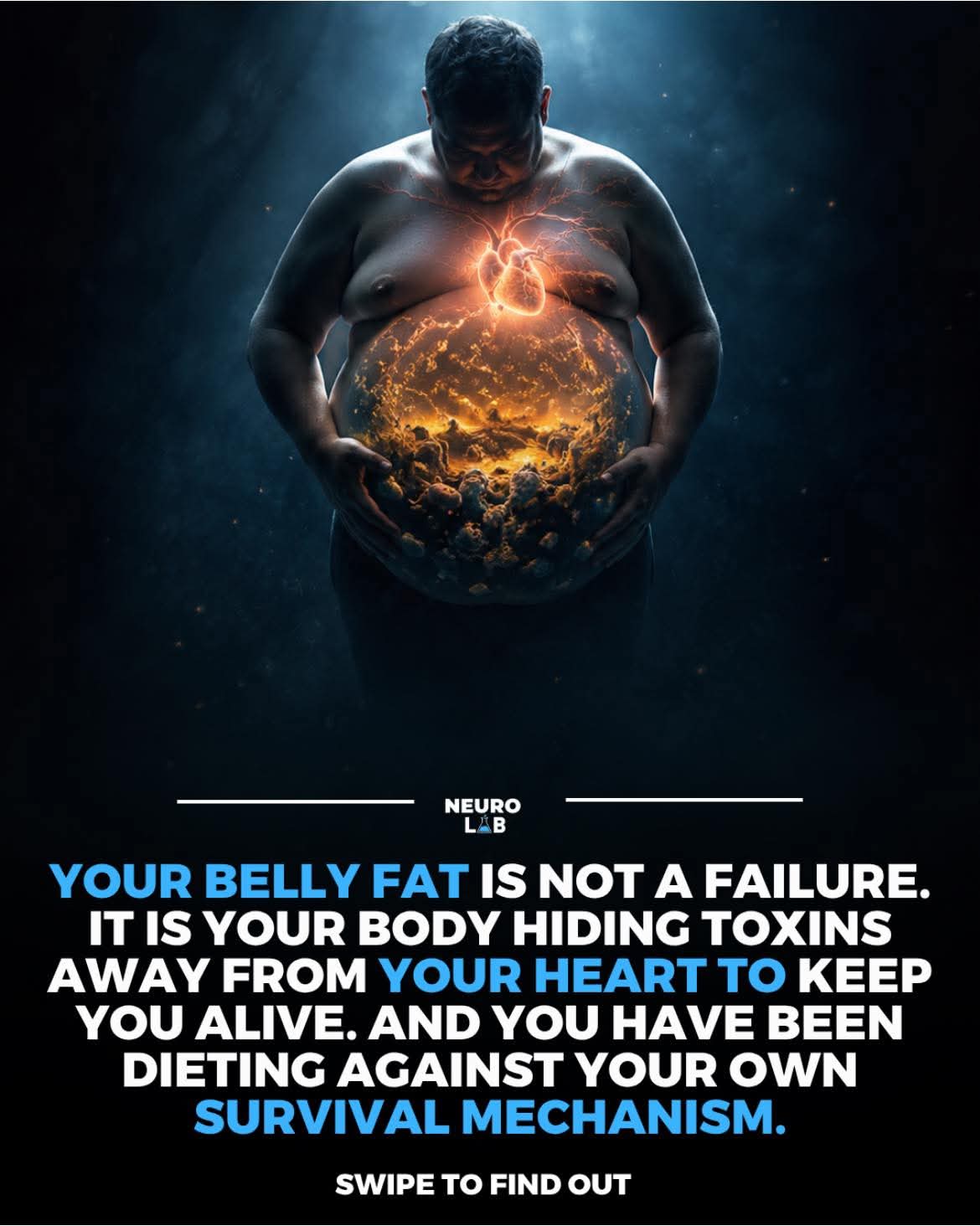
A science-backed look at why belly fat exists, what drives it, and how to work with your body instead of against it
For most women, the relationship with their belly has been a long, exhausting war. Years of calorie counting, skipped meals, punishing workout routines, and an endless cycle of hope and disappointment. You tried the diets. You did the workouts. You blamed yourself every time the scale refused to move or the waistband remained tight. And through all of it, nobody told you the one thing that might have changed everything.
Your body was not failing you. It was protecting you.
That stubborn fat around your abdomen — the layer you have spent years hating, hiding, and fighting — is not a sign of weakness or lack of discipline. It is evidence that your body’s survival systems are working exactly as they were designed to. Understanding this one truth does not just change how you think about your body. It changes the entire approach to addressing it.
The Biology Nobody Explains
Your body is a remarkably intelligent system, shaped by millions of years of evolutionary pressure. At its core, it has one overriding priority: keep you alive. Every process it runs, every decision it makes at a cellular level, is oriented around that single goal.
When your body encounters substances it cannot safely process or eliminate quickly — excess glucose from refined carbohydrates, metabolic waste products, synthetic hormones, environmental toxins, or stress hormones circulating at chronically elevated levels — it faces a problem. These substances, if left circulating freely in the bloodstream or deposited near vital organs, pose a threat. The liver, heart, lungs, and kidneys need to remain uncompromised to keep you functioning.
So the body does something brilliant. It locks the problem away.
Fat cells, particularly adipocytes in the abdominal region, are metabolically active storage units. They can absorb excess glucose and convert it to triglycerides for safekeeping. They can sequester fat-soluble environmental toxins — pesticides, industrial chemicals, endocrine-disrupting compounds — pulling them out of circulation before they can interfere with hormone signaling or cellular function. They can expand in response to chronic hormonal imbalance, essentially buffering the system while it tries to regain equilibrium.
Your belly fat is, in a very real physiological sense, a protective barrier between dangerous metabolic excess and your most vital organs.
This does not mean it is healthy to carry excess visceral fat long-term. It is not. But understanding why it is there in the first place completely reframes the conversation — and the solution.
Three Core Drivers of Abdominal Fat Storage
Research consistently identifies three primary categories of input that drive the body to accumulate fat around the abdomen. Addressing these drivers is the foundation of any approach that actually works.
1. Excess Glucose from Refined Carbohydrates and Sugar
Every time you eat, your blood glucose rises. Your pancreas responds by releasing insulin, a hormone whose job is to shuttle that glucose out of your bloodstream and into cells where it can be used for energy. This is a normal, healthy process.
The problem arises when glucose enters the bloodstream too quickly and in too large a quantity — which happens consistently with a diet high in refined carbohydrates, sugar, white flour products, sweetened beverages, and processed foods. The insulin response becomes outsized. Cells begin to become resistant to insulin’s signaling over time, requiring more and more of the hormone to achieve the same effect. This state, known as insulin resistance, is one of the most significant metabolic drivers of abdominal fat accumulation.
When insulin is chronically elevated, the body is effectively locked in fat storage mode. High insulin signals to fat cells that energy is abundant and should be stored. It simultaneously suppresses lipolysis — the process by which stored fat is broken down and released for use as energy. In simple terms: when insulin is high, the door to your fat stores stays locked. Your body cannot access the energy it has already saved, no matter how much you restrict your food intake.
This explains one of the most frustrating phenomena in women’s health: eating less but not losing fat. If insulin remains elevated — due to frequent snacking, high-carbohydrate meals, or insulin resistance — the biochemical environment continues to favor fat storage regardless of caloric deficit.
Research published in BMJ Open Diabetes Research and Care by Unwin and colleagues in 2019 demonstrated significant improvements in metabolic markers, including weight and blood glucose, in patients who adopted low-carbohydrate nutritional approaches — suggesting that the type of food consumed, not just the quantity, meaningfully influences insulin dynamics and fat metabolism.
2. Excess Hormones — Cortisol and the Stress-Fat Connection
Cortisol is your body’s primary stress hormone. Released by the adrenal glands in response to perceived threat — whether that threat is a predator, a difficult conversation with your boss, a financial crisis, or a chronic sense of not being enough — cortisol prepares your body for immediate physical action. It raises blood glucose, increases heart rate, and redirects resources toward survival functions.
This acute stress response is adaptive and life-saving. The problem is that the human stress response system did not evolve for modern life. It was designed for short, intense bursts of danger, not for the grinding, low-level, never-fully-resolving stressors that characterize contemporary living — work pressure, relationship strain, financial anxiety, sleep deprivation, and the constant background hum of digital overstimulation.
When cortisol is chronically elevated, it drives fat storage in a very specific location: the abdomen. Research by Björntorp published in Obesity Reviews in 2001 identified the relationship between stress hormones and abdominal obesity, noting that the visceral fat depot is particularly sensitive to cortisol signaling. Visceral fat cells have a higher density of cortisol receptors compared to subcutaneous fat elsewhere in the body, making the abdominal region especially responsive to hormonal stress signals.
Cortisol also raises blood glucose — even in the absence of food intake — by triggering gluconeogenesis, the process by which the liver manufactures glucose from non-carbohydrate sources. This, in turn, drives insulin release. The cycle becomes self-reinforcing: chronic stress → elevated cortisol → elevated glucose → elevated insulin → increased fat storage → frustration and shame → more stress.
This is not a metaphor. This is biochemistry. The very emotional experience of failing at a diet raises cortisol and perpetuates the mechanism it was meant to address.
Epel and colleagues at the University of California, San Francisco, demonstrated in their landmark 2000 study published in Psychosomatic Medicine that women who responded to stress with greater cortisol reactivity showed higher levels of abdominal fat, regardless of their overall body weight. The connection between psychological stress and the specific pattern of abdominal fat distribution was direct and measurable.
3. Excess Toxins — The Environmental Burden Stored in Fat Cells
This third driver receives the least attention in mainstream conversations about weight, yet it may be one of the most significant factors contributing to the global rise in metabolic dysfunction.
We live in a world saturated with synthetic chemicals. Pesticide residues on produce. BPA and phthalates leaching from plastics. Flame retardants in furniture. Heavy metals in drinking water. Synthetic fragrances in cosmetics and cleaning products. Persistent organic pollutants accumulating through the food chain. Many of these substances are classified as endocrine disruptors — compounds that interfere with the body’s hormone signaling systems, either by mimicking hormones, blocking hormone receptors, or disrupting the production and metabolism of naturally occurring hormones like estrogen, progesterone, thyroid hormone, and insulin.
Because many of these toxins are fat-soluble, the body cannot simply filter them out through the kidneys and excrete them in urine. Instead, it does something logical and protective: it stores them in fat cells, where they are sequestered away from sensitive tissues and kept relatively inert.
The consequence is a bidirectional problem. First, the body may resist losing fat specifically because doing so would release stored toxins back into circulation — a kind of biochemical reluctance to liberate the very substances it has worked to isolate. Second, as fat cells accumulate toxins, they can begin to dysfunction metabolically, altering the hormonal signals they release, impairing their normal response to insulin, and contributing to the low-grade systemic inflammation that characterizes metabolic syndrome.
This is why approaches to metabolic health that include liver support, gut health optimization, and reduction of toxic exposures often produce results that calorie restriction alone cannot.
Why Dieting Often Makes It Worse
With this framework in place, the repeated failure of conventional diets becomes not only understandable but predictable.
Severe caloric restriction is a physiological stressor. It activates the same threat-response systems as other forms of danger. Cortisol rises. The body interprets restriction as scarcity and becomes more efficient at storing energy, not less. Muscle mass decreases while fat stores — particularly visceral fat, which the body prioritizes for preservation — remain stubbornly resistant.
Crash diets that eliminate whole food groups without addressing the underlying insulin dynamics or stress physiology frequently produce short-term weight loss (mostly water and muscle) followed by rapid regain — often with additional fat accumulation, because the body has recalibrated toward more aggressive storage in anticipation of the next period of famine.
The shame spiral accelerates this. When a diet fails, the emotional response — self-criticism, frustration, a sense of personal inadequacy — is itself a cortisol trigger. The same internal narrative of “I failed again” that feels like a private psychological experience is simultaneously a hormonal event with measurable biochemical consequences.
This is not a small point. It is central to understanding why millions of women remain trapped in cycles of dieting and weight regain despite genuine effort and sincere desire to change. The war itself is part of the problem.
What Actually Works: Working With the System
The shift from fighting the body to working with it requires practical as well as philosophical changes. Here is what the evidence actually supports.
Reduce refined glucose input. This does not require extreme restriction or the elimination of all carbohydrates. It requires reducing the frequency and magnitude of blood glucose spikes — prioritizing whole foods over processed ones, pairing carbohydrates with protein, fat, and fiber to slow their absorption, reducing sugar-sweetened beverages, and increasing the proportion of nutrient-dense foods in the diet. When blood glucose is more stable, insulin levels moderate, and the biochemical environment shifts gradually from one that favors fat storage to one that permits fat release.
Address cortisol — specifically and intentionally. Sleep is the single most powerful cortisol regulator available to most people. Chronic sleep deprivation drives cortisol elevation across the board. Prioritizing seven to nine hours of quality sleep is not a luxury; it is a metabolic intervention. Beyond sleep, practices that activate the parasympathetic nervous system — slow breathing, gentle movement, time in nature, social connection — directly counteract cortisol’s effects. This is not wellness idealism. It is physiology.
Support the liver and detoxification pathways. Because the liver is the primary organ responsible for processing both hormones and environmental toxins, supporting hepatic function matters. This includes adequate hydration, a diet rich in cruciferous vegetables (broccoli, cauliflower, Brussels sprouts, kale), which contain compounds that support Phase II liver detoxification, and reduction of ongoing toxic exposure where possible — filtering drinking water, choosing organic produce for the highest-pesticide items, transitioning away from plastic food storage and cookware, and reviewing personal care products for endocrine-disrupting ingredients.
Support gut health. The gut microbiome plays a significant role in both estrogen metabolism and inflammatory signaling. A dysbiotic gut — one with compromised bacterial diversity — impairs estrogen recycling, contributes to systemic inflammation, and disrupts the gut-brain axis in ways that amplify stress reactivity. Dietary fiber, fermented foods, and probiotic and prebiotic support can meaningfully shift this environment.
Move in ways that reduce rather than spike cortisol. High-intensity exercise has clear benefits, but for women with elevated baseline cortisol — which includes most chronically stressed, sleep-deprived, or severely restricting women — it can paradoxically worsen the hormonal picture. Walking, swimming, yoga, and moderate-intensity strength training tend to improve insulin sensitivity without adding to the cortisol burden. Building movement that feels restorative rather than punishing changes the hormonal conversation.
Prioritize adequate protein. Protein supports muscle mass, improves satiety, and has a moderate effect on stabilizing blood glucose by slowing gastric emptying. It also provides the amino acid building blocks for neurotransmitters involved in mood regulation — an indirect pathway to cortisol management. Most women eating conventional diets are under-consuming protein relative to their metabolic needs.
The Metabolic Permission Shift
One of the most important concepts in contemporary understanding of fat metabolism is this: insulin must be low for the body to access stored fat as fuel.
Fat cells release their stored energy — triglycerides broken down into free fatty acids — through a process called lipolysis. This process is strongly suppressed by insulin. As long as insulin remains elevated, fat stores remain locked. This is not a flaw in human physiology; it is a rational design. If you have just eaten, your body should be using the glucose from that meal for energy. It should not simultaneously be burning stored fat. Insulin coordinates this switch.
The practical implication is that any approach to fat loss that does not address insulin levels — regardless of how low its calories are — will be working against the body’s own regulatory systems. Conversely, approaches that reduce insulin — through lower refined carbohydrate intake, adequate meal spacing, improved sleep, stress management, and exercise — create the biochemical conditions under which the body naturally begins to access and utilize stored fat.
This is not a diet hack or a metabolic trick. It is how the system is designed to work.
Reframing the Conversation
The body that has been accumulating fat around your belly is not a broken body. It is a responsive body. It has been receiving signals — elevated glucose, elevated cortisol, elevated toxic load — and it has been responding to those signals with the tools evolution gave it.
The work of addressing abdominal fat is therefore not primarily a discipline problem. It is an information problem. The body needs different inputs. Less glucose, delivered more slowly. Less cortisol, through genuine stress reduction rather than through restriction. Less toxic burden, through conscious reduction of environmental exposures and active support of elimination pathways.
When those inputs change, the signals change. When the signals change, the body’s decisions change. Fat that was stored for protective reasons becomes available for release because the emergency that prompted its accumulation has passed.
This is not a quick process. Years of chronic cortisol elevation, insulin resistance, and toxic accumulation are not reversed in a week. But the direction of change — less restriction, more nourishment; less punishment, more genuine metabolic support — tends to produce results that sustain themselves, because they work with the body’s intelligence rather than against it.
The question has never really been: why won’t my body cooperate?
The real question, all along, has been: what is my body responding to, and how can I change that signal?
That shift — from blame to curiosity, from war to collaboration — is where lasting metabolic health actually begins.
This article is for educational purposes only and does not constitute medical advice. If you have concerns about your weight, hormonal health, or metabolic conditions, please consult a qualified healthcare professional.
References
Björntorp, P. (2001). Do stress reactions cause abdominal obesity and comorbidities? Obesity Reviews, 2(2), 73–86.
Epel, E. S., et al. (2000). Stress and body shape: Stress-induced cortisol secretion is consistently greater among women with central fat. Psychosomatic Medicine, 62(5), 623–632.
Unwin, D., et al. (2019). It is the glycaemic response to, not the carbohydrate content of food that matters in type 2 diabetes and obesity: The glycaemic index revisited. BMJ Open Diabetes Research and Care, 7(1), e000539.
