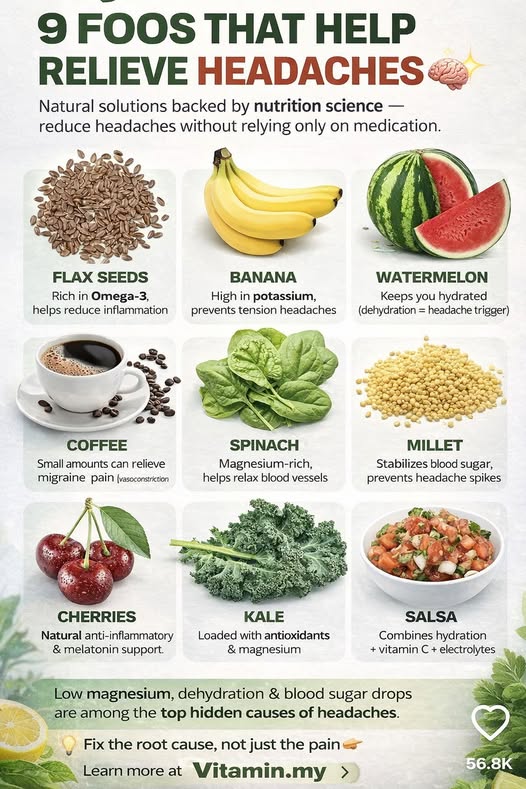
9 Natural Foods That Help Fight Headaches
Before reaching for the painkillers, your kitchen may already hold the most powerful remedy. Discover how whole foods can ease, prevent, and reduce your headaches naturally.
Why Are Headaches So Common — And What Can We Do?
Headaches are among the most universally experienced ailments on the planet. According to the World Health Organization, nearly half of the adult population worldwide experiences a headache disorder at any given time. For many people, the reflexive response to a throbbing head is to reach for over-the-counter pain relief — ibuprofen, aspirin, acetaminophen. These medications can provide quick relief, but they come with a cost.
Regular reliance on pain medications — particularly without addressing the root causes — can lead to what medical professionals call “medication overuse headaches,” a paradoxical condition where the very pills you take to stop headaches eventually cause more of them. There’s also the long-term concern about gastrointestinal stress, liver burden, and cardiovascular risk that comes with frequent NSAID use.
But here’s what often goes overlooked: the food we eat plays a profound and well-documented role in headache prevention and management. Specific nutrients — magnesium, potassium, omega-3 fatty acids, antioxidants, and water-soluble compounds — have been studied extensively for their ability to reduce headache frequency and severity. And the sources of these nutrients are sitting right in your grocery bag.
Food is not merely fuel. It is pharmacology — a complex delivery system of compounds that regulate inflammation, hormones, blood vessels, and nerve signals. What you eat today is the headache you will or won’t have tomorrow.
— Nutritional Neuroscience PerspectiveThis guide explores nine of the most effective whole foods for headache relief and prevention, examining the science behind each one, practical ways to incorporate them into your daily diet, and the broader lifestyle context that makes food-based headache management work.
Whether you suffer from tension headaches, hormonal migraines, cluster headaches, or simple dehydration-related head pain, the foods on this list offer something meaningful for you.
Nature’s Headache Pharmacy
Each of these foods contains specific compounds that target different mechanisms of headache — from vascular tension to dehydration to neurotransmitter imbalance.
Flax Seeds
Flaxseeds are among the richest plant sources of alpha-linolenic acid (ALA), a type of omega-3 fatty acid that the body partially converts to EPA and DHA — the same anti-inflammatory compounds found in fish oil. Chronic neuroinflammation is one of the least discussed but most significant contributors to recurrent headaches, particularly migraines. Research published in the British Medical Journal suggests that omega-3 supplementation can reduce both the frequency and severity of migraines compared to omega-6-heavy diets.
Beyond omega-3s, flaxseeds contain lignans — powerful plant-based phytoestrogens that may help women whose headaches are hormonally triggered, particularly those linked to menstrual cycle fluctuations. A single tablespoon of ground flaxseed added to a smoothie or yogurt delivers meaningful nutrition without altering the taste of your meal.
- Rich in ALA omega-3 fatty acids — potent anti-inflammatory action
- Lignan content may help regulate hormonal headache triggers
- High in fibre, supporting a gut-brain connection beneficial for migraine reduction
- Best consumed ground for maximum nutrient absorption
Banana
The humble banana deserves far more credit than it usually receives in headache conversations. A single medium banana contains around 422 mg of potassium — roughly 9% of your daily recommended intake. Potassium is an electrolyte that is absolutely critical to proper neurological function and fluid balance within cells. When potassium levels drop, even slightly, it can cause the blood vessels around the brain to constrict, leading to the familiar throbbing tension of an electrolyte-deficiency headache.
Bananas also provide a modest but meaningful amount of magnesium (around 32 mg), a mineral that directly relaxes blood vessels and has been clinically shown to prevent migraine episodes. Their high natural sugar content, combined with fibre, makes them excellent for preventing blood sugar crashes — another common but underappreciated headache trigger. For athletes, post-exercise headaches caused by sodium and potassium depletion are almost always improved by a banana.
- High potassium content combats electrolyte-deficiency headaches
- Moderate magnesium supports vascular relaxation
- Stabilises blood sugar, preventing hypoglycaemic headaches
- Convenient, portable, and naturally hydrating
Watermelon
Dehydration is one of the most common and most preventable causes of headaches. Many people simply do not drink enough water throughout the day, and the early consequence of mild dehydration is a dull, persistent headache that worsens with activity. Watermelon is composed of approximately 92% water by weight, making it one of the most hydrating whole foods available. Unlike drinking a glass of water, the water in watermelon is bound to natural sugars, electrolytes, and fibre, which causes it to be absorbed more slowly and retained more effectively in the body’s tissues.
Beyond hydration, watermelon is one of the few foods rich in lycopene — a carotenoid antioxidant that has demonstrated neuroprotective properties in studies. It also provides citrulline, an amino acid that promotes blood vessel flexibility and healthy circulation, directly countering the vascular constriction that contributes to headache pain. This makes watermelon uniquely valuable among headache-fighting foods.
- 92% water content for deep cellular hydration
- Lycopene provides neuroprotective antioxidant benefits
- Citrulline supports vascular health and blood flow
- Electrolytes in natural form — magnesium, potassium, calcium
Coffee (In Moderation)
Coffee occupies a fascinating and nuanced position in the headache world — it can both cause and cure them, depending entirely on dosage and habit. At moderate levels, caffeine is a potent vasoconstrictive agent. When blood vessels in the brain dilate excessively — a hallmark of migraine pathophysiology — caffeine helps narrow them back to a normal diameter, providing measurable pain relief. This is the same reason caffeine is an active ingredient in many commercial headache medications, including Excedrin Migraine.
A small cup of coffee (around 65–100 mg of caffeine) at the onset of a headache can reduce pain by 40% when combined with a common painkiller, according to research in the journal Cephalalgia. However, the flip side is equally important to understand. Caffeine is also a diuretic that can contribute to dehydration, and habitual coffee drinkers who skip their morning cup will experience caffeine withdrawal headaches — often more intense than the original problem. The key is moderation: one to two cups daily, consistently, rather than sporadic heavy use.
- Caffeine narrows dilated blood vessels — core mechanism of relief
- Potentiates the effect of pain-relieving medications
- Coffee also contains polyphenols with anti-inflammatory properties
- Caution: Excess intake worsens dehydration and rebound headaches
Spinach
Spinach stands as one of the most nutritionally concentrated leafy greens available, and its headache-fighting credentials are remarkable. A single 100g serving of raw spinach provides approximately 79 mg of magnesium — nearly 20% of the recommended daily value — along with substantial amounts of vitamin B2 (riboflavin), folate, and vitamin K. Magnesium deficiency has been identified in research as a direct physiological cause of migraines, with studies showing that up to 50% of migraine sufferers have measurably low magnesium levels during an attack.
Riboflavin (vitamin B2) deserves particular mention. Multiple clinical trials, including studies published in Neurology, have shown that high-dose riboflavin supplementation significantly reduces migraine frequency in adults. Spinach provides this nutrient in food form. The nitrates in spinach also convert to nitric oxide in the body, which helps relax and widen blood vessels — the opposite of the vascular constriction that triggers many headaches. Whether raw in salads, blended into smoothies, or lightly sautéed, spinach is one of the easiest and most powerful foods you can add to a headache-prevention diet.
- Exceptional magnesium source — directly prevents migraine onset
- Riboflavin (B2) clinically proven to reduce migraine frequency
- Dietary nitrates support vasodilation and blood flow
- Folate supports nervous system health and neurotransmitter synthesis
Millet
Millet is a group of ancient cereal grains that remain a staple food across parts of Africa, India, and Southeast Asia, yet is significantly underappreciated in modern Western diets. It is completely gluten-free and has a glycaemic profile that promotes more stable blood sugar than many refined grains — a key advantage, since blood sugar crashes are among the leading dietary triggers for tension headaches. One cup of cooked millet delivers approximately 77 mg of magnesium, along with phosphorus, B vitamins, and the amino acid tryptophan — a precursor to serotonin.
Serotonin plays a direct role in migraine biology. During a migraine attack, serotonin levels fluctuate dramatically, causing the blood vessel changes associated with the characteristic throbbing pain. Foods that support healthy serotonin production and regulation — like millet, thanks to its tryptophan content — may help maintain the biochemical equilibrium that keeps migraines at bay. For those who suspect gluten sensitivity as a headache trigger, millet offers a nutritious and versatile grain alternative that won’t aggravate the gut-brain connection.
- Naturally gluten-free — removes a common inflammatory headache trigger
- High magnesium for vascular and neurological headache prevention
- Tryptophan supports serotonin balance — critical in migraine biology
- Sustained energy release prevents blood sugar-triggered headaches
Cherries
Tart cherries — in particular Montmorency cherries — have attracted significant scientific attention over the past decade as a natural anti-inflammatory and sleep-regulating food. Their deep red pigment comes from anthocyanins, flavonoid compounds that inhibit the same inflammatory pathways (COX-1 and COX-2 enzymes) as ibuprofen and aspirin. Research from the American Journal of Therapeutics found that drinking tart cherry juice significantly reduced markers of inflammation, making it a compelling dietary alternative to NSAID medications for managing pain.
The sleep connection is equally important. Tart cherries are one of the few food sources of naturally occurring melatonin, the hormone that regulates circadian rhythms. Poor sleep is both a trigger for migraines and a consequence of chronic headache disorders, creating a vicious cycle. By naturally improving sleep quality, regular cherry consumption addresses one of the most significant lifestyle contributors to headache frequency. Additionally, cherries contain quercetin, a flavonoid with well-documented anti-inflammatory and antioxidant properties that further support headache reduction.
- Anthocyanins inhibit COX inflammatory enzymes — natural pain relief
- Natural melatonin content improves sleep quality, reducing headache triggers
- Quercetin provides antioxidant neuroprotection
- Tart cherry juice is particularly potent — 250ml twice daily studied clinically
Kale
Kale has rightfully earned its reputation as a nutritional powerhouse, and when it comes to headache prevention, it delivers on multiple fronts simultaneously. A single cup of raw kale provides around 31 mg of magnesium, 299 mg of potassium, significant vitamin C, K, and B6, and a broad range of antioxidant compounds including kaempferol and quercetin. Vitamin B6 is particularly relevant here — it is a cofactor in the synthesis of several neurotransmitters including serotonin, dopamine, and GABA, all of which play a role in pain modulation and stress-related headache prevention.
Kale’s high vitamin K2 content supports healthy blood circulation and may reduce the vascular inflammation component of headaches. Its antioxidant profile helps protect brain cells from oxidative stress — a factor increasingly linked to chronic migraine conditions. The potassium-magnesium combination in kale works synergistically to maintain proper electrolyte balance in nerve cells, which is fundamental to preventing the neurological hyperexcitability that precedes many migraine attacks. Steaming kale briefly (rather than eating it raw in large quantities) improves nutrient absorption and reduces its mild goitrogenic compounds.
- Combined potassium and magnesium — dual electrolyte headache protection
- Vitamin B6 supports neurotransmitter synthesis for pain modulation
- Kaempferol and quercetin provide anti-inflammatory antioxidant protection
- Vitamin K2 supports circulatory health and blood flow
Salsa
Salsa — the classic combination of tomatoes, onions, jalapeños or other peppers, garlic, and lime juice — might seem like an unlikely entry on a medicinal food list, but its headache-fighting credentials are genuinely impressive. Tomatoes, the base ingredient, are rich in lycopene, vitamin C, and potassium. Lycopene has demonstrated neuroprotective and anti-inflammatory properties in clinical research, while vitamin C and potassium directly support vascular health and electrolyte balance.
Onions provide quercetin and sulfur compounds that reduce systemic inflammation. Garlic contains allicin, one of the most well-studied natural anti-inflammatory compounds in food science, with demonstrated effects on reducing vascular inflammation. Hot peppers — when tolerated — contain capsaicin, which paradoxically desensitises pain receptors with regular consumption, and has even been studied as a treatment for cluster headache prophylaxis. Lime juice provides vitamin C and helps the body absorb iron from other foods — iron deficiency is a well-documented cause of headaches in women. As a whole-food combination, fresh salsa is a surprisingly comprehensive headache-prevention tool in one delicious condiment.
- Tomato lycopene — neuroprotective and anti-inflammatory
- Garlic allicin reduces vascular inflammation
- Capsaicin from peppers desensitises pain receptors long-term
- Quercetin from onions provides additional anti-inflammatory action
Understanding the Biochemistry Behind Food and Headaches
Headaches are not a single disorder — they are a family of conditions with different underlying mechanisms. To understand how food helps, it is useful to know the primary physiological drivers of the most common headache types.
Vascular Headaches & Blood Vessel Regulation
Migraine headaches are primarily vascular in origin. They involve a complex cascade where cortical spreading depression triggers trigeminal nerve activation, causing blood vessels around the brain to first constrict and then dilate dramatically. This dilation activates pain-sensing nerve endings, producing the characteristic throbbing. Foods rich in magnesium, potassium, omega-3 fatty acids, and nitrates work at the level of smooth muscle in blood vessel walls, helping maintain optimal tone and preventing the extreme fluctuations that trigger migraine pain.
Tension-Type Headaches & Inflammation
Tension headaches — the bilateral, pressure-like sensation that affects the majority of headache sufferers — are driven primarily by muscular tension, psychological stress, and low-grade systemic inflammation. The anti-inflammatory compounds found across this food list — anthocyanins in cherries, omega-3s in flaxseed, kaempferol in kale, allicin in garlic — collectively lower the body’s inflammatory burden. Over time, a consistently anti-inflammatory diet measurably reduces the frequency of tension-type headaches in susceptible individuals.
Dehydration and Electrolyte Headaches
Even mild dehydration — a 1–2% reduction in total body water — is sufficient to trigger headache symptoms in many people. The brain is enclosed in cerebrospinal fluid, and when the body is dehydrated, this fluid reduces in volume, causing the brain to pull slightly away from the skull and stretch pain-sensitive structures. Water-rich foods like watermelon deliver hydration more effectively than beverages alone, as the matrix of plant cells allows slower, more sustained absorption.
The Gut-Brain Axis
Emerging research has identified the gut microbiome as a significant player in migraine biology. Migraine sufferers show distinct gut microbiome compositions compared to non-sufferers, with lower bacterial diversity and dysbiosis patterns that may influence serotonin production, vagal nerve signalling, and neuroinflammation. The fibre-rich, polyphenol-dense foods on this list — particularly flaxseed, spinach, kale, and cherries — are all prebiotic-supportive, nourishing the gut bacteria that produce serotonin precursors and maintain the mucosal lining that keeps inflammatory compounds from reaching systemic circulation.
Key Headache-Fighting Nutrients
How to Build a Headache-Prevention Diet
Knowing which foods help is only half the equation. Here is how to turn this knowledge into a daily habit.
Prioritise Hydration Throughout the Day
Aim for at least 2–2.5 litres of total water intake daily, counting both beverages and the water content of fruits and vegetables. Keep a glass of water beside your bed, and drink it before your first coffee. Start meals with water-rich foods like watermelon, cucumber, or spinach salads.
Never Skip Meals — Stabilise Blood Sugar
Hypoglycaemia is one of the most reliable headache triggers. Eat regular, balanced meals spaced no more than 4–5 hours apart. Include a source of complex carbohydrate (like millet or banana) and protein at each meal to slow glucose absorption and prevent the blood sugar crashes that cascade into head pain.
Eat Magnesium-Rich Foods Daily
Spinach, kale, millet, flaxseed, and banana all provide meaningful magnesium. Aim to include at least two of these in your daily diet. If you find that headaches cluster around your menstrual cycle or periods of high stress, increasing magnesium intake during those windows can be particularly effective.
Reduce Known Dietary Triggers
While adding beneficial foods, simultaneously identify and reduce your personal dietary triggers. Common culprits include aged cheese, processed meats containing nitrites, alcohol (particularly red wine and beer), artificial sweeteners, and MSG. Keep a food diary alongside your headache log for at least four weeks to identify your specific patterns.
Use Tart Cherry Juice Strategically
Research suggests 250ml of tart cherry juice twice daily provides meaningful anti-inflammatory and sleep benefits. Consider making this a nightly ritual — its melatonin content will improve sleep quality, which compounds the headache-prevention benefits over time. Look for unsweetened varieties without added juice concentrates.
Manage Caffeine Consistently
If you use coffee, keep your intake consistent — same time each day, similar amounts. The most significant caffeine-related headache risk is the withdrawal headache from inconsistency. One to two cups of quality coffee at consistent times is almost always better for headache prevention than sporadic, high-volume intake.
Your Fork Is Your Most Powerful Headache Remedy
The nine foods covered in this guide — flaxseeds, bananas, watermelon, coffee, spinach, millet, cherries, kale, and salsa — represent a cross-section of the nutritional science on headache prevention. Each works through a distinct mechanism: some by reducing inflammation, others by replenishing depleted electrolytes, some by regulating blood vessels, others by supporting sleep and neurotransmitter balance.
What makes dietary intervention particularly powerful is its cumulative nature. A single banana won’t cure your migraine. But a diet consistently rich in magnesium, potassium, omega-3 fatty acids, antioxidants, and water — maintained over weeks and months — can measurably reduce the frequency, intensity, and duration of headache episodes. This is not anecdote; it is documented in peer-reviewed clinical literature.
The additional benefit is the complete absence of side effects. Unlike NSAIDs, which carry gastrointestinal, cardiovascular, and renal risks with prolonged use, eating more spinach and cherries carries no downside. A diet built around these foods also improves cardiovascular health, cognitive function, gut health, energy levels, and sleep quality simultaneously. Headache prevention, in this context, is simply a bonus that comes with eating well.
Start small. Add a handful of spinach to your morning eggs. Keep bananas on the counter. Make salsa from scratch on weekends. Swap your afternoon snack for watermelon. Drink tart cherry juice in the evenings. These are not dramatic lifestyle overhauls — they are small, sustainable shifts that your body will thank you for, one fewer headache at a time.
The Bottom Line
The next time you feel a headache coming on, before reaching for the pill bottle, ask yourself: have I had enough water today? Have I eaten a full, nutrient-rich meal? When did I last have magnesium-rich food? More often than you might expect, the honest answer to those questions will point you straight to your kitchen — and to a remedy that leaves you healthier, not dependent.
Medical Disclaimer: The information provided in this article is for educational and informational purposes only and is not intended as medical advice. The foods and dietary strategies described herein may support general wellbeing and may complement headache management for some individuals, but they do not constitute a cure or treatment for any medical condition, including migraine disorders. If you experience frequent, severe, or unusual headaches, please consult a licensed healthcare professional for an accurate diagnosis and appropriate treatment plan. Do not discontinue prescribed medications without medical guidance.
