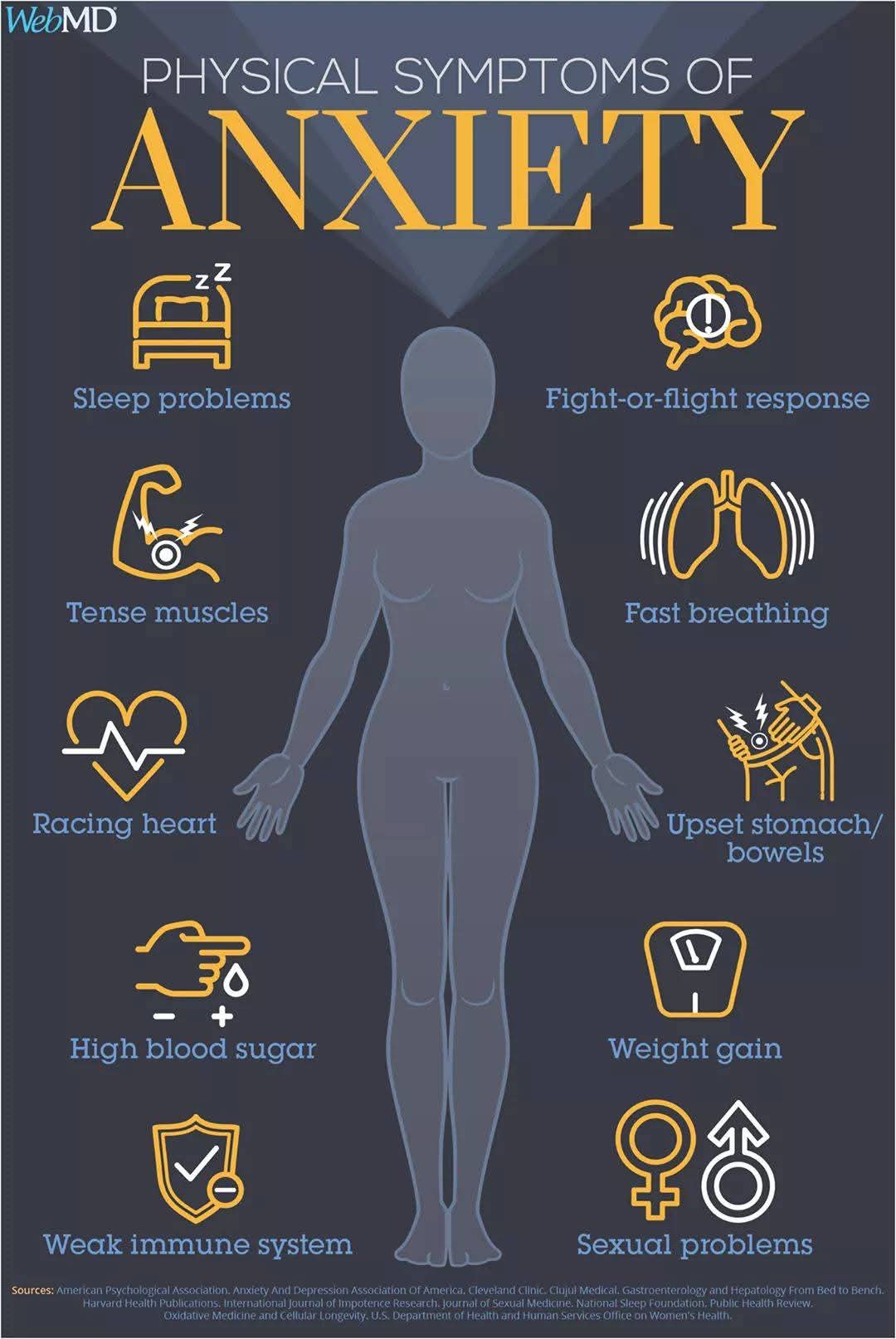
Anxiety is often thought of as a mental or emotional issue — worry, nervousness, or unease about future events. However, anxiety also manifests in very real physical symptoms that can affect nearly every system in the body. According to WebMD’s infographic, these physical symptoms range from sleep issues to digestive problems, and even sexual dysfunction.
In this article, we’ll dive deeper into each of these symptoms, explore scientific studies behind them, and provide evidence-based dietary recommendations to support the body and mind.
1. Sleep Problems
One of the most common symptoms of anxiety is trouble sleeping. This includes difficulty falling asleep, frequent waking, and non-restorative sleep.
A study published in Sleep Medicine Clinics (2013) found that anxiety and insomnia are bi-directionally linked, meaning anxiety causes poor sleep, and poor sleep exacerbates anxiety. This cycle can lead to chronic insomnia if not addressed.
Tip: Avoid caffeine after 2 PM, and include magnesium-rich foods like spinach, pumpkin seeds, and bananas in your dinner to improve relaxation.
2. Tense Muscles
Muscle tension is another classic sign of anxiety. The body is in a constant state of readiness — as if it’s bracing for danger.
A 2016 review in Psychosomatic Medicine linked chronic stress to increased muscle activity, especially in the shoulders, neck, and jaw, often leading to tension headaches and TMJ disorders.
Tip: Ensure you’re getting enough magnesium, calcium, and omega-3s to support nerve and muscle relaxation. Cold-water fish like salmon and sardines are excellent.
3. Fight-or-Flight Response
The fight-or-flight response is the body’s natural reaction to stress. It increases heart rate, breathing, and sends blood to the muscles — preparing you to either fight or flee.
While useful in real danger, chronic anxiety keeps this system permanently activated, leading to long-term wear and tear on the body.
A 2018 study from Frontiers in Neuroscience emphasized how chronic activation of the sympathetic nervous system (fight-or-flight mode) is linked to cardiovascular risk and inflammation.
Tip: Support your nervous system with foods rich in B vitamins (like leafy greens and legumes), and incorporate deep breathing or meditation practices daily.
4. Fast Breathing (Hyperventilation)
Anxiety often leads to shallow or rapid breathing, which can cause dizziness, chest tightness, and even panic attacks.
Research in Behaviour Research and Therapy (2005) showed that breathing retraining significantly reduced panic symptoms in individuals with anxiety.
Tip: Incorporate breathing exercises like 4-7-8 breathing. Add potassium-rich foods like bananas and avocados to balance blood pH and reduce hyperventilation symptoms.
5. Racing Heart
Anxiety can trigger palpitations or a pounding heart. This is due to increased adrenaline and cortisol levels.
A 2021 meta-analysis in JAMA Psychiatry found that individuals with anxiety disorders have a significantly higher risk of developing cardiovascular diseases.
Tip: Stay hydrated, cut out processed sugar, and eat heart-healthy fats like olive oil, flaxseeds, and chia seeds.
6. Upset Stomach / Bowels
The gut and brain are closely connected via the gut-brain axis. Anxiety can cause bloating, nausea, diarrhea, or constipation.
According to The American Journal of Gastroenterology (2019), people with irritable bowel syndrome (IBS) are more likely to have anxiety. This is because the vagus nerve directly links gut function to mood.
Tip: Include probiotic foods like yogurt, kefir, and sauerkraut. Eat fiber-rich foods like oats and legumes to feed healthy gut bacteria.
7. High Blood Sugar
Chronic stress raises cortisol, which in turn can raise blood sugar levels — even in non-diabetics.
A 2022 study in Endocrine Connections explained that prolonged cortisol elevation leads to insulin resistance and weight gain, contributing to type 2 diabetes.
Tip: Replace refined carbs with low-glycemic foods like sweet potatoes, legumes, and whole grains. Include chromium-rich foods like broccoli to stabilize blood sugar.
8. Weight Gain
When anxiety triggers cortisol spikes, the body tends to store fat — especially around the abdomen. Cortisol not only increases appetite but also cravings for high-fat and sugary foods.
Research published in Obesity Reviews (2015) found a clear link between stress, emotional eating, and increased BMI.
Tip: Eat protein with every meal to stay full longer. Prioritize healthy fats (like avocado and nuts) that satisfy without spiking insulin.
9. Weak Immune System
Anxiety suppresses the immune system, making it harder to fight off infections and prolonging recovery times.
A study in Nature Reviews Immunology (2004) found that chronic psychological stress significantly weakens immune response, reducing lymphocyte production.
Tip: Add immune-boosting foods like citrus fruits (vitamin C), garlic (antiviral), and mushrooms (beta-glucans) to your diet. Zinc from pumpkin seeds or oysters is also key.
10. Sexual Problems
Anxiety affects libido, arousal, and even fertility. High cortisol disrupts reproductive hormones like estrogen and testosterone.
A 2020 study in The Journal of Sexual Medicine confirmed that anxiety is a major cause of erectile dysfunction, low libido, and sexual dissatisfaction in both men and women.
Tip: Eat zinc-rich foods, increase omega-3s, and reduce alcohol intake. Adaptogens like ashwagandha have been shown to improve libido and reduce stress.
Foods That Help Calm the Anxious Body & Mind
Here’s a roundup of anti-anxiety superfoods supported by research:
- Salmon & Sardines – High in omega-3 DHA for brain and mood.
- Leafy Greens (Spinach, Kale) – Rich in folate and magnesium.
- Avocados – High in healthy fats and B vitamins.
- Almonds & Walnuts – Excellent sources of zinc and magnesium.
- Oats & Brown Rice – Slow-release carbs to regulate blood sugar.
- Greek Yogurt & Kefir – Probiotics that support the gut-brain axis.
- Dark Chocolate (70%+ cocoa) – Contains flavonoids that reduce cortisol.
- Green Tea – Contains L-theanine, known to promote calm focus.
Final Thoughts
Anxiety is not just “in your head.” It’s a full-body experience that affects your muscles, gut, immune system, hormones, and sleep. But with the right nutrition and lifestyle changes, you can dramatically reduce these physical symptoms.
Start by nourishing your body with healthy fats, clean protein, fiber, and micronutrients. Avoid ultra-processed foods, refined sugar, and inflammatory oils. And don’t forget to prioritize sleep, movement, and breathing techniques.
Your body speaks through symptoms. Anxiety is one of its loudest cries for help — but also one of the most reversible.
Sources:
- Harvard Health Publishing
- American Journal of Gastroenterology
- JAMA Psychiatry
- Nature Reviews Immunology
- Journal of Sexual Medicine
- Sleep Medicine Clinics
- Obesity Reviews
- Frontiers in Neuroscience
