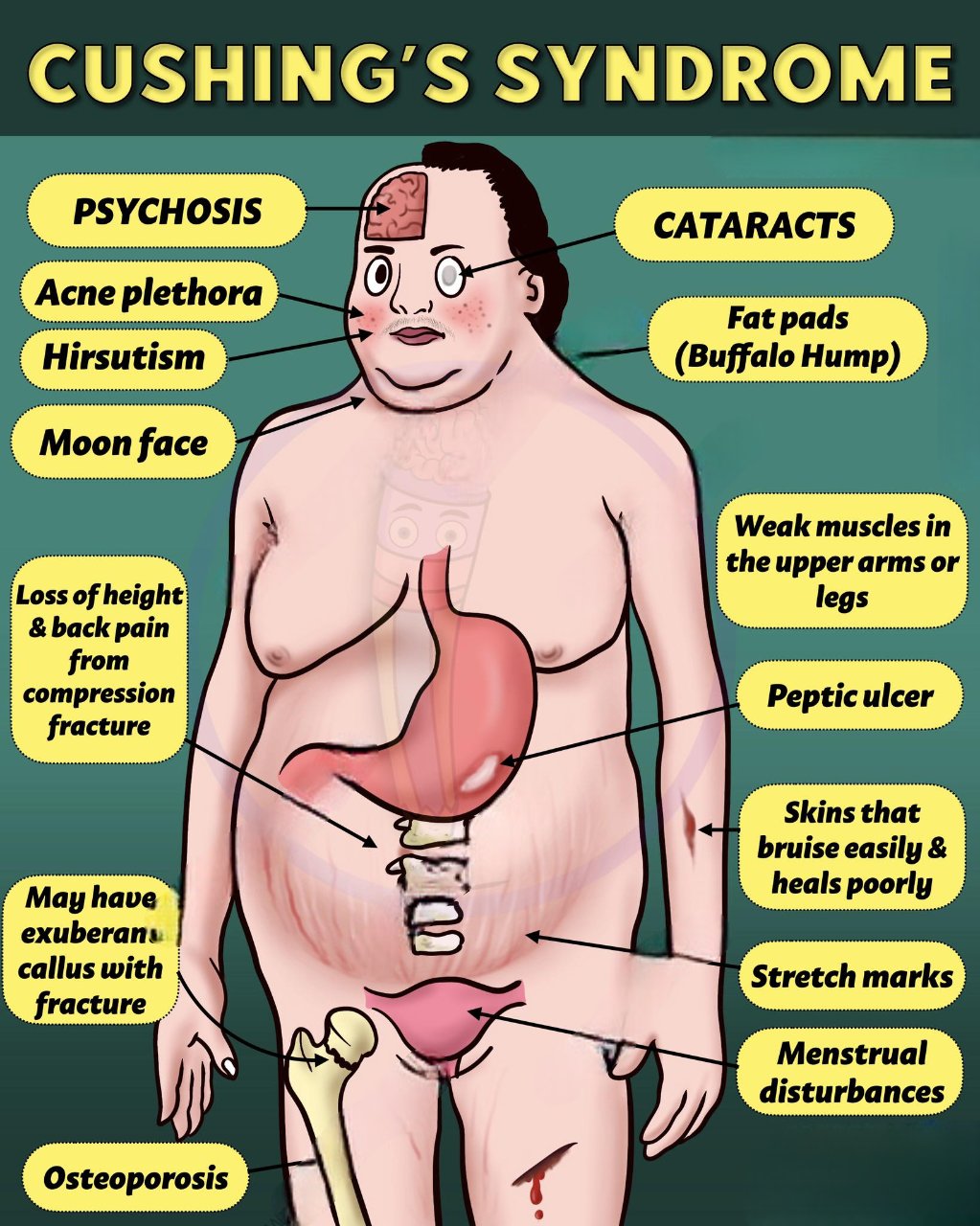
Cushing’s Syndrome is a lesser-known yet serious hormonal disorder that can silently affect your weight, mood, appearance, and overall health. Often misdiagnosed or overlooked, this condition occurs when your body is exposed to excessive cortisol—commonly known as the “stress hormone.” Understanding Cushing’s Syndrome can help you or your loved ones recognize the signs early, seek proper treatment, and adopt supportive dietary changes.
What is Cushing’s Syndrome?
Cushing’s Syndrome (CS) is caused by abnormally high levels of cortisol in the bloodstream over a prolonged period. Cortisol is naturally produced by the adrenal glands and plays a key role in regulating metabolism, immune response, and stress. However, excess cortisol can be harmful, leading to a variety of physical and psychological symptoms.
Common Causes of Cushing’s Syndrome
Cushing’s Syndrome can result from both external and internal sources of cortisol overproduction. The four major causes include:
1. Prolonged Use of Corticosteroids
The most common cause is long-term use of corticosteroid medications, such as prednisone, often prescribed for chronic inflammatory conditions like asthma, lupus, or rheumatoid arthritis.
Research Insight: According to a study published in The Journal of Clinical Endocrinology & Metabolism (2015), patients on prolonged corticosteroid therapy had a significantly higher incidence of Cushingoid symptoms compared to control groups.
2. Pituitary Gland Tumors (Cushing’s Disease)
In Cushing’s Disease—a subtype of Cushing’s Syndrome—the pituitary gland secretes excess adrenocorticotropic hormone (ACTH), which in turn stimulates the adrenal glands to produce more cortisol.
3. Adrenal Gland Tumors
Benign or malignant tumors in the adrenal glands can independently produce excess cortisol, bypassing pituitary control.
4. Genetic or Familial Cushing’s Syndrome
This is a rare inherited condition where genetic mutations cause overactivity in cortisol-producing cells.
Tell-Tale Symptoms of Cushing’s Syndrome
Recognizing the symptoms early can significantly improve treatment outcomes. Key signs include:
- Central weight gain (abdomen and trunk)
- Moon face – rounded, puffy face
- Buffalo hump – fat pad on the upper back
- Purple striae – stretch marks, especially on the abdomen
- Thin skin that bruises easily
- High blood pressure
- Fatigue and muscle weakness
- Mood changes, such as depression, anxiety, or irritability
- In women: irregular periods and hirsutism (excess facial/body hair)
- In men: decreased libido and fertility issues
Note: These symptoms may develop gradually and are often mistaken for signs of aging, stress, or obesity.
How is Cushing’s Syndrome Diagnosed?
Diagnosis involves a combination of clinical examination and specialized tests such as:
- 24-hour urinary cortisol test
- Midnight salivary cortisol test
- Low-dose dexamethasone suppression test
- Blood ACTH levels
- Imaging scans (MRI/CT) to detect tumors
Your healthcare provider may recommend multiple tests over time to confirm the diagnosis, as cortisol levels can fluctuate.
Effective Treatment Options
1. Tapering Off Corticosteroids
If Cushing’s is caused by medication, the gradual reduction or switching to non-steroidal alternatives may help normalize cortisol levels.
⚠️ Important: Never stop corticosteroids suddenly, as it can cause adrenal crisis. Always follow your doctor’s instructions.
2. Surgical Removal of Tumors
For pituitary or adrenal tumors, surgery is often the most effective treatment. In some cases, radiation therapy or a second surgery might be required.
3. Medications
If surgery isn’t possible or fails to correct cortisol levels, certain medications can help block or reduce cortisol production, such as:
- Ketoconazole
- Metyrapone
- Mitotane
- Pasireotide
Diet and Lifestyle Tips to Support Recovery
Diet alone cannot cure Cushing’s Syndrome, but it plays a crucial role in managing symptoms, especially those related to weight, blood pressure, and blood sugar levels.
🥗 1. Focus on Anti-Inflammatory Foods
Excess cortisol increases inflammation in the body. Incorporate foods that are rich in antioxidants and omega-3 fatty acids:
- Fatty fish (salmon, sardines)
- Leafy greens (spinach, kale)
- Berries (blueberries, strawberries)
- Olive oil and nuts
🍞 2. Limit Simple Carbohydrates and Sugar
High cortisol can lead to insulin resistance and elevated blood sugar. Choose complex carbs:
- Whole grains (quinoa, brown rice, oats)
- Legumes (lentils, chickpeas)
- Vegetables over starchy snacks
🧂 3. Reduce Sodium Intake
Cortisol retains sodium, which can increase blood pressure. Limit:
- Processed foods
- Canned soups
- Fast food
Opt for potassium-rich foods like bananas, sweet potatoes, and avocados to balance electrolytes.
🥚 4. Eat Adequate Protein
To combat muscle loss and fatigue, include lean proteins:
- Eggs
- Chicken breast
- Greek yogurt
- Tofu and tempeh
💧 5. Stay Hydrated
Cortisol imbalances can cause fluid retention. Drinking plenty of water helps flush excess sodium and reduce puffiness.
Lifestyle Modifications That Help
Beyond diet, the following habits can enhance recovery and hormonal balance:
🧘 Stress Management
Since cortisol is the body’s primary stress hormone, managing stress is key. Try:
- Meditation or prayer
- Deep breathing
- Nature walks
- Gentle yoga
🧠 A 2021 review in Frontiers in Psychology confirmed that mindfulness techniques can significantly lower salivary cortisol levels.
💤 Prioritize Sleep
Poor sleep increases cortisol production. Aim for 7–9 hours per night, maintain a regular sleep schedule, and avoid screens before bed.
🚶♀️ Regular, Low-Impact Exercise
Heavy workouts can spike cortisol in some people. Instead, go for:
- Walking
- Swimming
- Pilates
Can You Prevent Cushing’s Syndrome?
Most cases are not preventable, especially those caused by tumors or genetic factors. However, if you are using corticosteroid medications, discuss with your doctor about:
- The lowest effective dose
- Non-steroidal alternatives
- Regular monitoring for symptoms
When Should You See a Doctor?
If you or someone close to you is experiencing unexplained weight gain, fatigue, skin changes, or mood swings, don’t brush it off. Early diagnosis of Cushing’s Syndrome improves the chance of a full recovery and reduces the risk of complications like:
- Type 2 diabetes
- Osteoporosis
- Cardiovascular disease
Don’t Ignore the Signs
Cushing’s Syndrome may be rare, but its impact is real. Recognizing the symptoms, getting an early diagnosis, and committing to a supportive diet and lifestyle can make a world of difference. Whether the cause is medication or a hormonal tumor, treatment is available—and recovery is possible.
📚 References:
- Nieman, L. K., et al. (2015). The diagnosis of Cushing’s syndrome: an Endocrine Society Clinical Practice Guideline. J Clin Endocrinol Metab, 100(8), 2807–2831.
- Pivonello, R., et al. (2020). Cushing’s syndrome: Subclinical and overt presentations. Frontiers in Endocrinology, 11, 332.
- Chrousos, G. P. (2021). Stress and disorders of the stress system. Nature Reviews Endocrinology.
