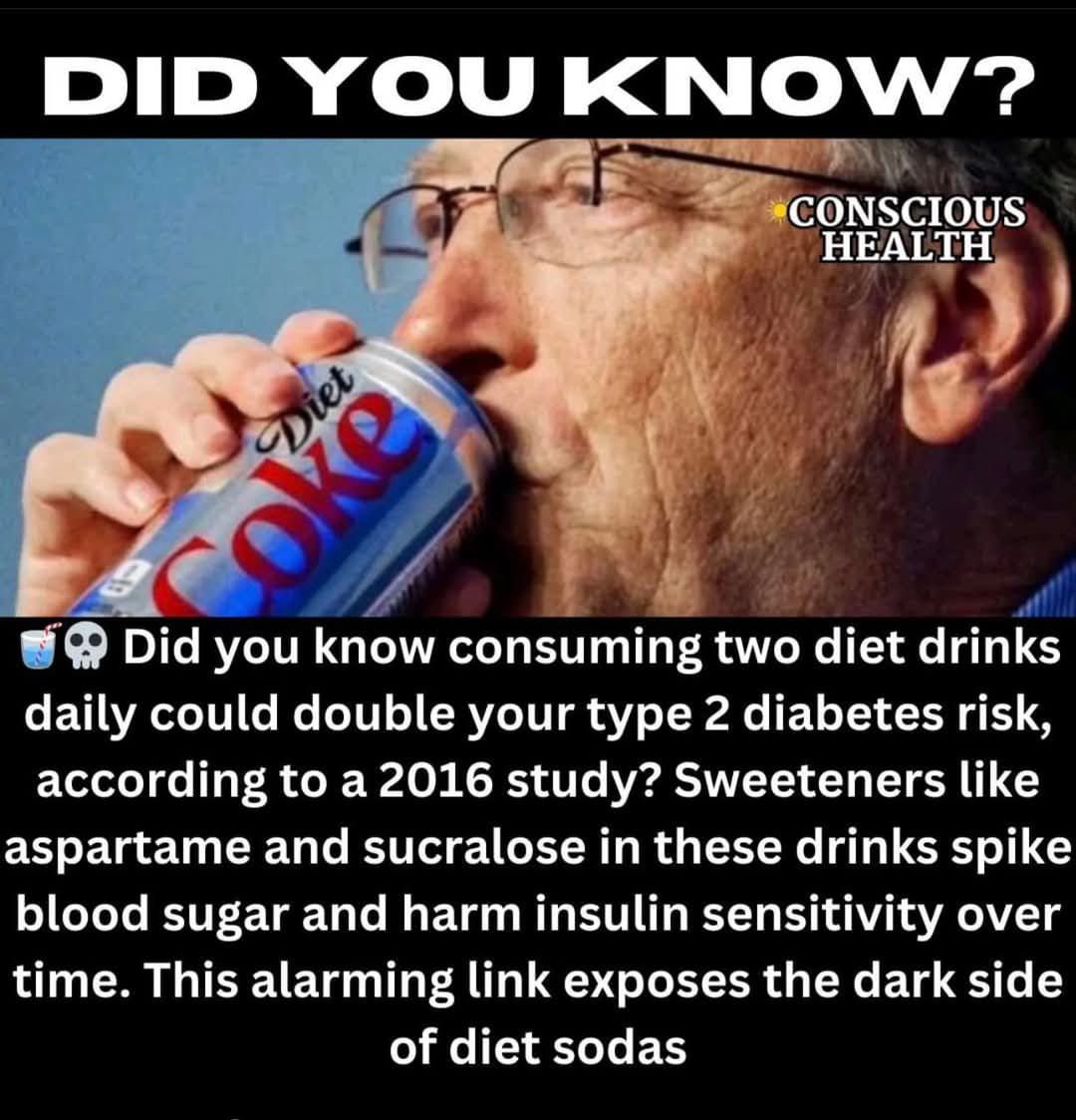
Can drinking Diet Coke or other diet sodas double your risk of type 2 diabetes? Discover what research says about artificial sweeteners like aspartame and sucralose, and how they impact your metabolic health.
🥤 The Diet Soda Dilemma: Zero Sugar, Zero Risk?
Diet sodas like Diet Coke have long been marketed as healthier alternatives to sugar-laden drinks. By replacing sugar with artificial sweeteners such as aspartame or sucralose, these beverages promise fewer calories and better blood sugar control. But is the trade-off really safe?
Recent studies suggest that diet sodas may not be as harmless as they seem. In fact, some evidence points to a surprising link between regular consumption of artificially sweetened drinks and an increased risk of type 2 diabetes — even without sugar.
⚠️ The 2016 Study That Raised Alarm Bells
A pivotal study published in 2016 in the journal Nutrition and Diabetes analyzed the dietary habits of more than 66,000 women over a 14-year period. Researchers found that women who consumed two or more diet drinks per day had a significantly higher risk of developing type 2 diabetes compared to those who did not drink them at all — even after adjusting for body mass index (BMI) and total energy intake.
📚 Study Reference:
Fagherazzi G, Vilier A, Saes Sartorelli D, et al. Consumption of artificially and sugar-sweetened beverages and incident type 2 diabetes in the Etude Epidémiologique auprès des femmes de la Mutuelle Générale de l’Education Nationale–European Prospective Investigation into Cancer and Nutrition cohort. Nutrition and Diabetes. 2013.
🧪 How Artificial Sweeteners Affect Your Metabolism
Artificial sweeteners like aspartame, sucralose, and acesulfame potassium do not raise blood sugar directly — but their impact on metabolism and insulin sensitivity is more complex than initially believed.
1. Insulin Confusion
When you taste sweetness (even without calories), your body prepares for glucose intake. This can cause a mismatch in insulin release and actual blood sugar levels, eventually leading to insulin resistance — a key factor in the development of type 2 diabetes.
2. Gut Microbiome Disruption
A 2014 study published in Nature found that artificial sweeteners, especially saccharin, caused disruptions in the gut microbiota of mice, which led to glucose intolerance. Follow-up tests on humans showed similar patterns in some individuals.
📚 Study Reference:
Suez J, Korem T, Zeevi D, et al. Artificial sweeteners induce glucose intolerance by altering the gut microbiota. Nature. 2014.
3. Appetite Stimulation
Paradoxically, diet drinks may increase cravings for sweet or high-calorie foods. A 2010 article in Yale Journal of Biology and Medicine reviewed how artificial sweeteners can overstimulate sweet taste receptors and reduce the brain’s reward response to actual sugar — leading to overeating and weight gain.
📊 Observational Evidence: More Than Just One Study
Multiple large-scale observational studies support the link between diet drinks and metabolic disease:
- Nurses’ Health Study (Harvard): Women who consumed more than one diet soda daily had a 47% greater risk of stroke, heart attack, or vascular death.
- Framingham Heart Study: Found that frequent consumption of diet soda was associated with increased waist circumference over time.
- San Antonio Heart Study: Linked diet soda intake to 70% greater waist circumference gain over 10 years.
While these studies do not prove causation, the consistency of the data across different populations is concerning.
🤔 What About Aspartame and Sucralose Safety?
✅ FDA Approval
Both aspartame and sucralose are FDA-approved and have been extensively tested for safety at typical consumption levels.
⚠️ But Emerging Studies Say Otherwise
Newer research suggests that long-term use or high-dose intake might influence glucose tolerance, brain function, and metabolic pathways. For example, a 2022 study in Cell Metabolism found that sucralose altered insulin response in healthy adults.
📚 Study Reference:
Serrano J, Kazan SN, et al. Artificial sweeteners elicit dose-dependent changes in glucose tolerance and gut microbiota in humans. Cell Metabolism. 2022.
💡 Should You Stop Drinking Diet Soda?
Here are some practical takeaways based on current research:
✔️ Occasional Use Is Likely Safe
Drinking one diet soda occasionally — especially as a way to cut down on sugar — is not likely to cause harm in healthy individuals.
🚫 Daily Use May Be Risky
Long-term daily consumption of two or more diet drinks could:
- Impair insulin sensitivity
- Disrupt gut microbiota
- Increase cravings and appetite
- Possibly increase the risk of type 2 diabetes
🥛 Better Alternatives
- Water infused with fruit
- Sparkling water with natural flavors
- Green tea or herbal teas
- Kombucha with low sugar
📉 Conclusion: Not So Sweet After All
The evidence is mounting that diet sodas — while free from sugar — are not free from health consequences. Especially when consumed daily, the artificial sweeteners they contain may have unintended effects on blood sugar control, insulin sensitivity, and gut health.
If you’re trying to manage weight, reduce diabetes risk, or simply improve overall health, it’s time to reconsider that second can of Diet Coke.
🔍 References
- Fagherazzi G, et al. (2013). Nutrition and Diabetes.
- Suez J, et al. (2014). Nature.
- Serrano J, et al. (2022). Cell Metabolism.
- Fowler SPG, et al. (2008). San Antonio Heart Study.
- Gardner C, et al. (2010). Yale J Biol Med.
📢 Call to Action (For Blog Footer)
Want more health science updates like this?
Subscribe to our newsletter for evidence-based wellness tips, food myths busted, and practical health advice you can trust.

One thought on “Hidden Dangers of Diet Sodas: Can They Really Double Your Risk of Type 2 Diabetes?”