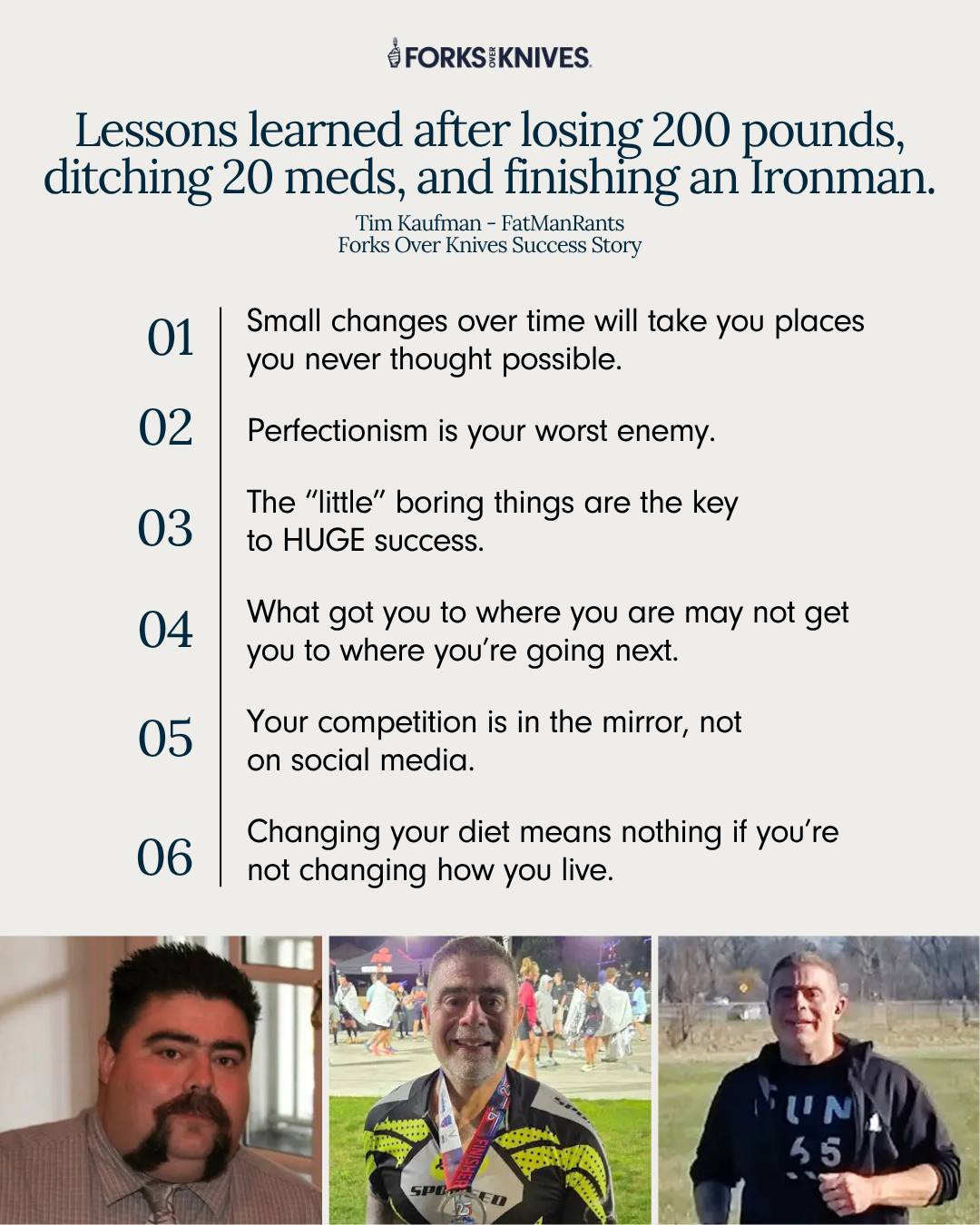
When Tim Kaufman was told he had just months to live, he made a choice that changed everything. His journey wasn’t perfect—but it was powerful.
“I was going to die, and it would be in a matter of months, not years. My doctor knew it—and so did I. So, what saved my life? I stopped eating processed junk and started eating whole plant foods. It was that simple. But in the years that passed, I learned that simple doesn’t always mean easy.
I’m not an expert, and I’m far from perfect, but here are a few things I’ve learned on my way to losing 200 pounds, getting off more than 20 prescription medications, and going from nearly immobile to crossing the finish line of an Ironman triathlon.”
Let Tim’s story be your reminder: It’s never too late to start, and small changes can lead to extraordinary transformation.
The Power of the Fork: Tim’s Story and the Science of a Plant-Based Diet
Tim Kaufman’s story is a powerful testament to the idea that your health destiny is not sealed. Facing a grim prognosis, he made a radical decision: he traded his old diet of processed foods for a whole-food, plant-based approach. This isn’t just a simple dietary choice; it’s a medical intervention that has been at the heart of a health movement known as Forks Over Knives.
The name itself, “Forks Over Knives,” highlights the core philosophy: use your fork to heal yourself through nutrition, rather than relying on a surgeon’s knife and a lifetime of medications. This lifestyle emphasizes eating whole, unprocessed, or minimally refined plant foods, such as:
- Fruits
- Vegetables
- Whole grains
- Legumes (beans, lentils, peas)
- Tubers (potatoes, sweet potatoes)
- Nuts and seeds
Conversely, it advocates for the near-complete elimination of animal products, processed foods, and added oils. For someone like Tim, this change was not just about weight loss—it was about fighting for his life.
The Latest Research on Plant-Based Nutrition
Tim’s personal experience is backed by a growing body of scientific evidence. Recent research continues to show that a whole-food, plant-based diet is a highly effective tool for preventing and even reversing many of the chronic diseases that plague modern society.
1. Weight Loss and Management: Studies consistently demonstrate that individuals who follow a plant-based diet have lower body weights and healthier BMIs. This is because whole plant foods are naturally low in calorie density but high in fiber and water, which keeps you feeling full and satisfied on fewer calories. A 2022 review in Obesity Science & Practice showed that a plant-based diet can significantly reduce inflammation-causing compounds in the bloodstream, which are often linked to weight gain and chronic disease.
2. Reversing Chronic Disease: The most compelling evidence lies in the diet’s ability to combat life-threatening conditions.
- Heart Disease: A 2024 paper from Bethsaida Hospital documented “remarkable” outcomes in patients with severe chronic illnesses, including the remission and reversal of coronary artery disease. Another study found that a plant-based diet could lower the risk of coronary heart disease by up to 40% by lowering LDL (“bad”) cholesterol, blood pressure, and inflammation.
- Type 2 Diabetes: The Physicians Committee for Responsible Medicine (PCRM) has shown that this diet can improve insulin sensitivity and lower A1c levels, with many patients able to reduce or even eliminate their need for diabetes medication.
- Longevity: Research published in 2024 further supports the notion that diet can be a powerful tool for healthy aging. One study found that shifting to a plant-based diet at age 40 could add an average of 6 to 9 years to a person’s lifespan.
Tim’s journey from being nearly immobile and on dozens of medications to becoming an Ironman triathlete is a powerful, real-world example of this research in action. He not only lost 200 pounds and got off his medications, but he fundamentally transformed his cellular health and physical capabilities.
Let Tim’s story and the latest science serve as your reminder: a powerful transformation is within reach. It’s never too late to begin, and the fork in your hand is the most powerful tool you have to start that journey.
Tips for a plant-based diet for an Ironman athlete:
1. Focus on Nutrient-Dense Calories
Plant-based foods are often less calorie-dense than animal products. As an Ironman athlete, you burn a massive number of calories, so you need to be intentional about getting enough energy. Incorporate calorically-dense whole foods like sweet potatoes, beans, avocados, nuts, and seeds into your daily meals.
2. Prioritize Carbohydrates for Fuel
Complex carbohydrates are your primary fuel source for endurance training. Ensure they form the foundation of your diet.
- Good sources: Oats, brown rice, quinoa, whole-grain breads and pasta, sweet potatoes, and fruits like bananas, dates, and mangoes.
- Race day: During the race, aim to consume 60-90g of carbohydrates per hour using sports nutrition products, gels, or easily digestible plant-based options like rice cakes.
3. Meet Your Protein Needs
Protein is crucial for muscle repair and recovery. While a single plant food may not contain all essential amino acids, you can easily get a complete protein profile by eating a variety of plant-based foods throughout the day.
- Protein-rich foods: Tofu, tempeh, lentils, chickpeas, black beans, edamame, quinoa, nuts, and seeds.
- Daily intake: Aim for 1.6-2.5 grams of protein per kilogram of body weight. Distribute your protein intake into 4-6 doses throughout the day to optimize muscle protein synthesis.
- Supplements: Consider a high-quality vegan protein powder (e.g., soy, hemp, brown rice, or pea protein) to help meet your needs, especially for post-workout recovery shakes.
4. Pay Attention to Micronutrients
Some key nutrients can be harder to get on a plant-based diet.
- Iron: Essential for carrying oxygen. Eat iron-rich foods like lentils, spinach, fortified cereals, and pumpkin seeds. Pair these with foods rich in Vitamin C (e.g., oranges, strawberries, bell peppers) to greatly improve iron absorption. Avoid drinking coffee or tea with meals, as they can inhibit absorption.
- Vitamin B12: This is only found naturally in animal products. You must get B12 from fortified foods (e.g., plant-based milks, nutritional yeast) or a reliable B12 supplement.
- Calcium & Vitamin D: Important for bone health. Consume calcium-rich foods like fortified plant milks, tofu made with calcium sulfate, and leafy greens. Get Vitamin D from sunlight or fortified foods, and consider a supplement.
- Omega-3s: Crucial for immune and heart health. Include flaxseeds, chia seeds, hemp seeds, and walnuts in your diet, as they contain ALA, which your body can convert to EPA and DHA.
5. Fueling Before and After Workouts
- Pre-workout: Eat a carb-rich snack that is easy to digest, such as a banana, oatmeal, or rice cakes with nut butter.
- Post-workout: A recovery meal or snack within 20 minutes is ideal. The goal is to replenish glycogen stores and repair muscles. A great option is a smoothie with plant-based protein powder, fruit, and leafy greens, or a meal with a mix of carbohydrates and protein, like quinoa and black bean tacos.
